Ladder logic is the language of factory automation, and it is more approachable than it looks. A gentle, practical introduction for complete beginners.
Ladder logic is the language that runs Malaysian factories, and most people who work near machines have never been shown how to read it. That is a shame, because it is one of the most approachable programming languages ever created, designed on purpose to look familiar to electricians. If you can read an electrical schematic, you are most of the way to reading ladder logic. This beginner's guide explains what ladder logic is, how it works, and why learning even the basics turns a maintenance technician into someone who can actually understand and troubleshoot the machines on the floor.
Why ladder logic exists
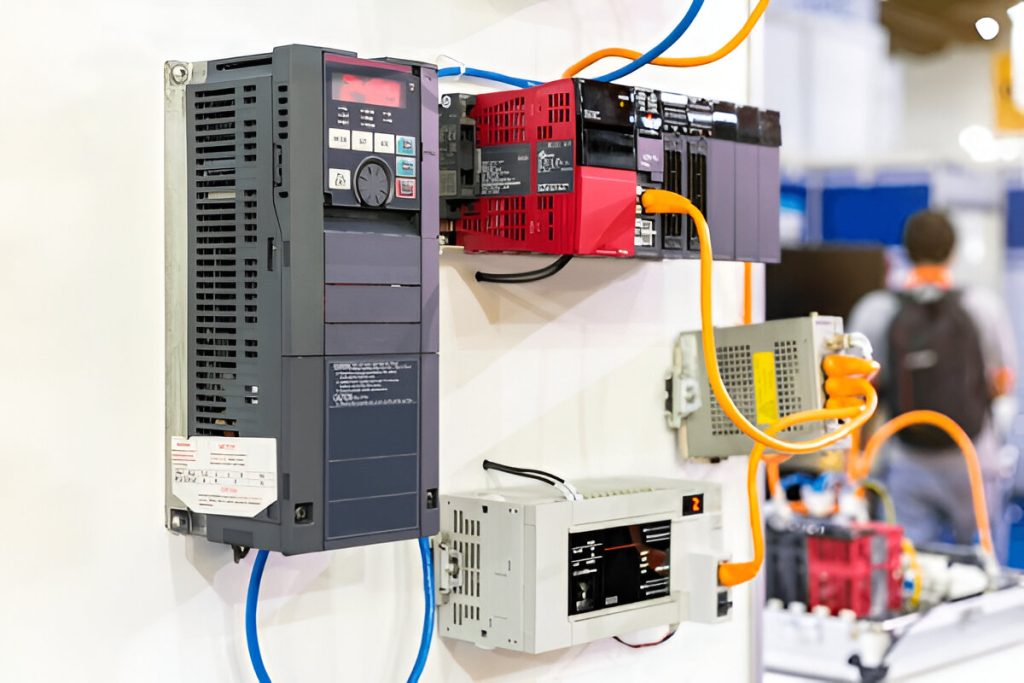
When PLCs were introduced, they replaced panels full of physical relays, timers and switches wired together to control a machine. The engineers who maintained those panels were electricians who thought in terms of circuits and wiring diagrams. So the people who created PLC programming made the language look like those wiring diagrams on purpose. That way, the existing workforce could read the program without learning an alien computer language. That decision is why ladder logic still looks the way it does today, and why it remains so readable for anyone with an electrical background.
The name comes from the appearance. A ladder logic program looks like a ladder, with two vertical rails and horizontal rungs between them. Power flows from the left rail to the right, and each rung is a small piece of logic. Read the rungs top to bottom and you are reading the machine's decision-making, one step at a time.
Ladder logic was designed to be read by electricians, not computer scientists. If you can read a wiring diagram, you can learn to read a PLC.
The basic building blocks
You can understand the majority of real ladder programs with just a handful of elements. Here are the ones that matter most for a beginner.
Contacts (inputs)
A contact represents a condition, usually an input from the real world like a sensor, a switch or a button. A normally open contact passes power when its condition is true, for example when a sensor is triggered. A normally closed contact passes power when its condition is false. Contacts are how the program asks questions about the state of the machine: is the guard closed, is the part present, is the start button pressed.
Coils (outputs)
A coil represents an action, usually an output to the real world like a motor, a valve, a light or a solenoid. When power reaches a coil at the end of a rung, that output turns on. Coils are how the program does things: start the motor, open the valve, light the lamp.
The logic of a rung
Put contacts and coils together and a rung reads almost like a sentence. If the start button is pressed, and the guard is closed, and the emergency stop is not active, then run the motor. The contacts are the conditions on the left, the coil is the action on the right, and power only reaches the action when all the required conditions are met. That simple left-to-right flow is the heart of ladder logic.
Timers and counters
Two more elements handle time and quantity. A timer delays or times an action, for example keeping a fan running for two minutes after a machine stops. A counter counts events, for example tracking how many parts have passed a sensor. Between contacts, coils, timers and counters, you have the tools that make up the large majority of real factory programs.
Reading a program is the skill that matters most
Here is the key insight for a maintenance technician. You do not need to write large programs from scratch to get enormous value from ladder logic. The skill that transforms your working life is being able to read a running program and understand what it is doing. When a machine stops for no obvious reason, the ability to open the program, find the rung that is not completing, and see which condition it is waiting for is what turns a three-hour mystery into a twenty-minute fix.
Most faults on a PLC-controlled machine are the program correctly waiting for a condition that is not being met. A sensor that has drifted, a switch that is stuck, a guard that is not fully closed. If you can read the logic, you can see exactly what the machine is waiting for and go straight to that device. If you cannot, you are reduced to guessing and swapping parts. That single skill, reading the logic to find the held rung, is the most valuable thing a beginner takes from learning ladder logic.
A worked example in plain words
Imagine a simple conveyor. The logic might read like this across a few rungs. Rung one: if the start button is pressed and the emergency stop is not active, then set a running state. Rung two: if the running state is set and the safety guard is closed, then run the conveyor motor. Rung three: if a box breaks the photo-eye at the end, then stop the motor and light a full lamp.
Now suppose the conveyor will not start. A technician who can read this opens the program and checks the rungs in order. Is the running state set? If not, the problem is in rung one, so check the start button and the emergency stop. Is the running state set but the motor not running? Then rung two is the issue, so check the safety guard. In a couple of minutes, without touching a single part at random, the technician has narrowed a vague fault to a specific device. That is the power of reading ladder logic, and it is well within reach of any beginner.
What you cannot learn from an article alone
Reading about ladder logic gives you the concept. What it cannot give you is the fluency that comes from working with real programs on real hardware. There is a difference between understanding that a rung waits for a condition and being able to sit in front of a live machine, navigate the program, and confidently trace a fault under the pressure of a stopped line. That fluency comes from doing, not reading.
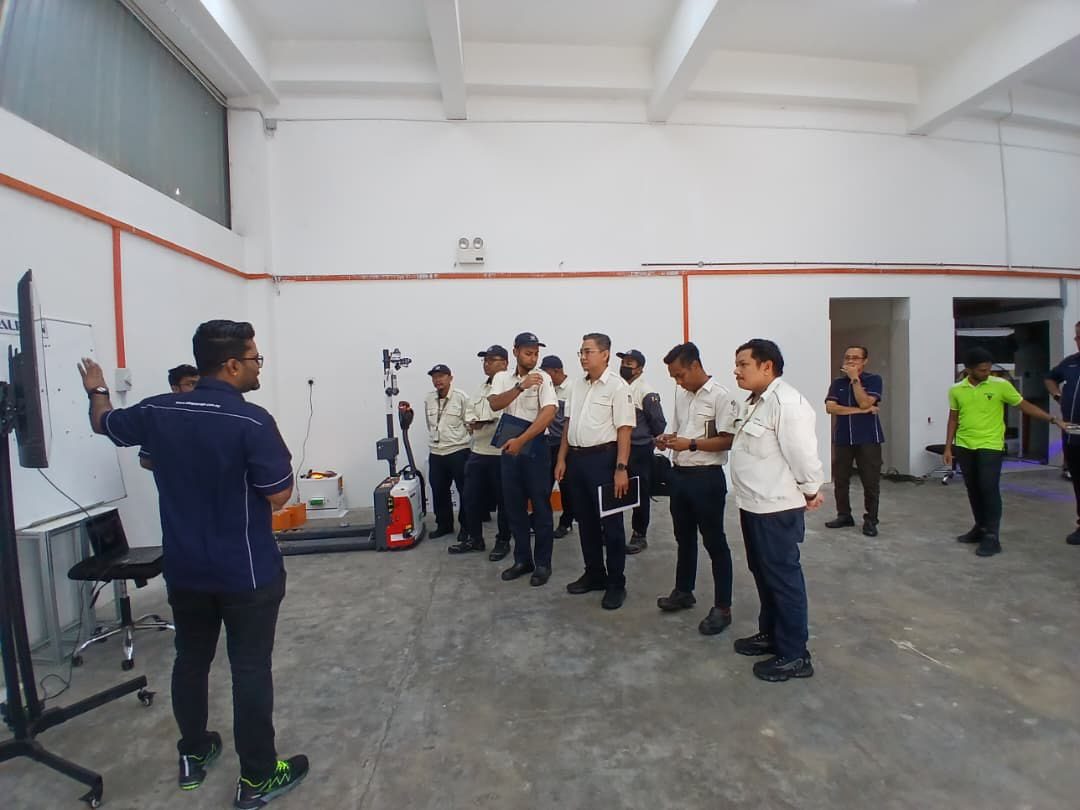
This is exactly why our PLC basic training is built around hands-on practice. Over two days, participants do not just hear about contacts and coils. They work in the programming environment, build real logic, test inputs and outputs against real devices, and finish with a mini project that ties it together. By the end, reading and building basic ladder logic is not a concept they have heard of. It is something they have actually done.
From reading to writing
Once you can read ladder logic confidently, writing simple logic follows naturally. Being able to make small modifications, add a rung, adjust a timer, change a condition, is the next step up in value. It means you can make small process improvements and fixes in-house instead of waiting for a machine builder to visit. You do not need to become a full programmer to benefit. Even the ability to make simple, safe modifications puts you well ahead of most maintenance staff and saves your factory real time and money.
Ladder logic is your gateway to everything else
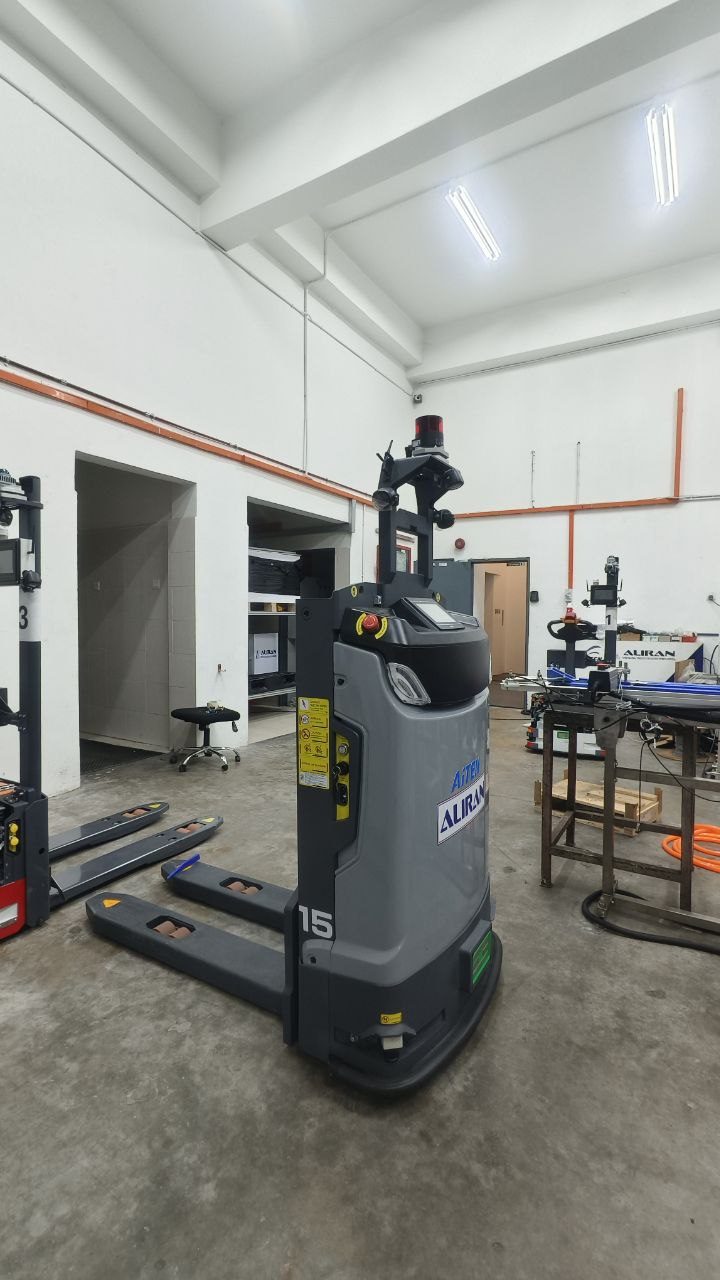
There is a bigger reason to learn ladder logic than any single machine. It is the foundation of industrial automation. Once you understand how a PLC thinks, everything else in the automated factory becomes more approachable. Robots that coordinate with PLCs, cobots on integrated cells, autonomous mobile robots signalling control systems, all of it builds on the same foundation of controllers and logic. A technician who understands ladder logic is positioned to grow into robot programming, integration and eventually the full automation engineer role. Ladder logic is where that whole journey starts, which is why it is the first thing we teach.
Common beginner questions
Is ladder logic hard to learn? No. It was specifically designed to be readable by electricians, and the core elements are few. Most people with a technical background pick up the basics quickly, especially with hands-on practice.
Do I need to be good at maths or computers? Not particularly. Ladder logic is about conditions and actions, which think more like electrical circuits than like traditional programming. If you understand how a control circuit works, you are well prepared.
Will learning one brand help me with others? Yes. The concepts of contacts, coils, timers, counters and rung logic are the same across brands. The software interface differs, but the thinking transfers directly.
How long until I can troubleshoot with it? Even a two-day hands-on course gets most technicians to the point where they can read a program and trace a basic fault. Fluency grows with practice on the job afterward.
Is the training claimable under HRD Corp? For eligible employers, yes. We are a registered provider, serial number 202501044803, and prepare the SBL-Khas paperwork so most of the cost is covered by the levy.
A note for technicians and factories in Selangor
For maintenance teams across Subang Jaya, Shah Alam, Klang, Petaling Jaya and the wider Selangor area, learning ladder logic locally means practising on real PLC hardware close to home and applying it at work immediately. Being based in Subang Jaya, we run small, hands-on groups with trainers who have spent decades on real plant floors, so the examples come from industry rather than a textbook. When your technician can read the logic on the machines you actually run, downtime gets shorter and dependence on outside help gets smaller.
The bottom line
Ladder logic is the language of the automated factory, and it was built to be learnable by exactly the people who work near machines. You do not need to write huge programs to benefit. The ability to read a running program and see what a stopped machine is waiting for is one of the highest-value skills a Malaysian maintenance technician can hold, and it turns long, guessing-game downtime into short, confident fixes. From there, reading leads to simple writing, and ladder logic becomes the gateway to robots, integration and a full automation career. It all starts with understanding contacts, coils and rungs, and with getting your hands on real hardware to make it stick. Contact us to book PLC training for your team, HRD Corp claimable where eligible, and give your people the language that runs the floor.
A worked example: start, stop and seal-in
The single most useful pattern for a beginner to understand is the start-stop circuit with a seal-in, because it appears in almost every machine you will ever meet. Picture a motor you want to start with a green button and stop with a red button. The obvious idea, energise the motor while the green button is pressed, fails immediately, because the motor stops the moment you let go of the button. What you actually want is for a quick press of green to start the motor and keep it running until red is pressed.
Ladder logic solves this with a seal-in, sometimes called a latch. On the rung, you place the green button contact and the motor output. Then, in parallel with the green button, you place a contact controlled by the motor output itself. Once the motor starts, its own contact closes and holds the rung true, so the motor stays on even after you release green. The red button sits in series as a normally-closed contact, so pressing it breaks the rung and stops the motor. Read the rung aloud and it makes sense: the motor runs if green is pressed or the motor is already running, and as long as red is not pressed. That one pattern, once it clicks, unlocks a huge amount of real ladder logic, because variations of it are everywhere.
Timers and counters, explained simply
Beyond contacts and coils, two special instructions do most of the interesting work in real programs: timers and counters. A timer does exactly what it sounds like. When its rung becomes true, it starts counting time, and after a set delay it turns on its own output. This is how a machine waits two seconds before releasing a part, or runs a fan for a minute after a motor stops. A counter counts events. Every time its rung goes from false to true, it adds one, and when it reaches a set number it turns on its output. This is how a machine counts parts into a box and signals when the box is full. You do not need to master every timer and counter variation to start. You need to understand that a timer delays and a counter tallies, and to recognise them when you see them in a program. Almost every real machine uses both.
The beginner mistakes that cause confusion
A few misunderstandings trip up nearly everyone learning ladder, and naming them saves hours of frustration. The first is confusing a normally-open and a normally-closed contact. A normally-open contact passes power when its input is on. A normally-closed contact passes power when its input is off. Mixing these up makes logic behave backwards, and it is the single most common beginner error. The second is forgetting that the PLC scans top to bottom, left to right, over and over. If you expect a rung to react instantly to something that happens later in the program, remember the scan order. The third is misreading a seal-in and wondering why an output will not turn off, when the answer is that the output is holding itself on through its own contact. None of these are hard once someone points them out, which is exactly why learning with a trainer beats struggling alone.
From reading to writing your first program
Reading ladder is the first skill. Writing it is the next, and it is closer than you think once you can read fluently. Your first program will likely be a version of the start-stop circuit, because it teaches contacts, coils and seal-ins all at once. From there you add a timer, then a counter, then a couple of interlocks so two outputs cannot both be on at once. Very quickly you are writing logic that controls a small real process. The leap from reading to writing is mostly confidence, and confidence comes from doing it on real hardware with someone to check your work. That is the whole design of a hands-on course: you do not just watch ladder logic, you build it, download it to a real PLC, and watch your own logic drive real outputs.
How ladder maps to the real machine
One thing that makes ladder click for maintenance people especially is realising how directly it maps to the physical machine. Each input contact usually corresponds to a real sensor, switch or button wired to the PLC. Each output coil usually corresponds to a real motor, valve, light or relay. When you trace a rung, you are really tracing the machine: this sensor, and that button, energise this valve. This is why maintenance technicians often take to ladder logic quickly. They already know the machine physically, and ladder is just the logic layer sitting on top of the wiring they already understand. Once you see a rung as a description of the real machine rather than abstract code, reading and fixing it becomes far more intuitive.
Why this foundation matters so much
Ladder logic is the foundation of factory automation, and understanding it changes your relationship with every automated machine on the floor. Instead of a black box you wait for a vendor to fix, the PLC becomes something you can open, read and reason about. A fault that used to mean a phone call and a wait becomes something you can trace yourself. That shift, from helpless to capable, is exactly what a first PLC course delivers, and ladder logic is the language that makes it possible. Everything more advanced in automation, from robot integration to full smart-factory systems, sits on top of this same foundation, which is why it is the right place for any beginner to start.
Ready to train your team?
Our training programmes are HRD Corp claimable for eligible employers. Get a proposal in one working day.
Request a Quote