Collaborative does not mean automatically safe. A plain-language guide to the safety methods, risk assessment and training behind a safe cobot cell.
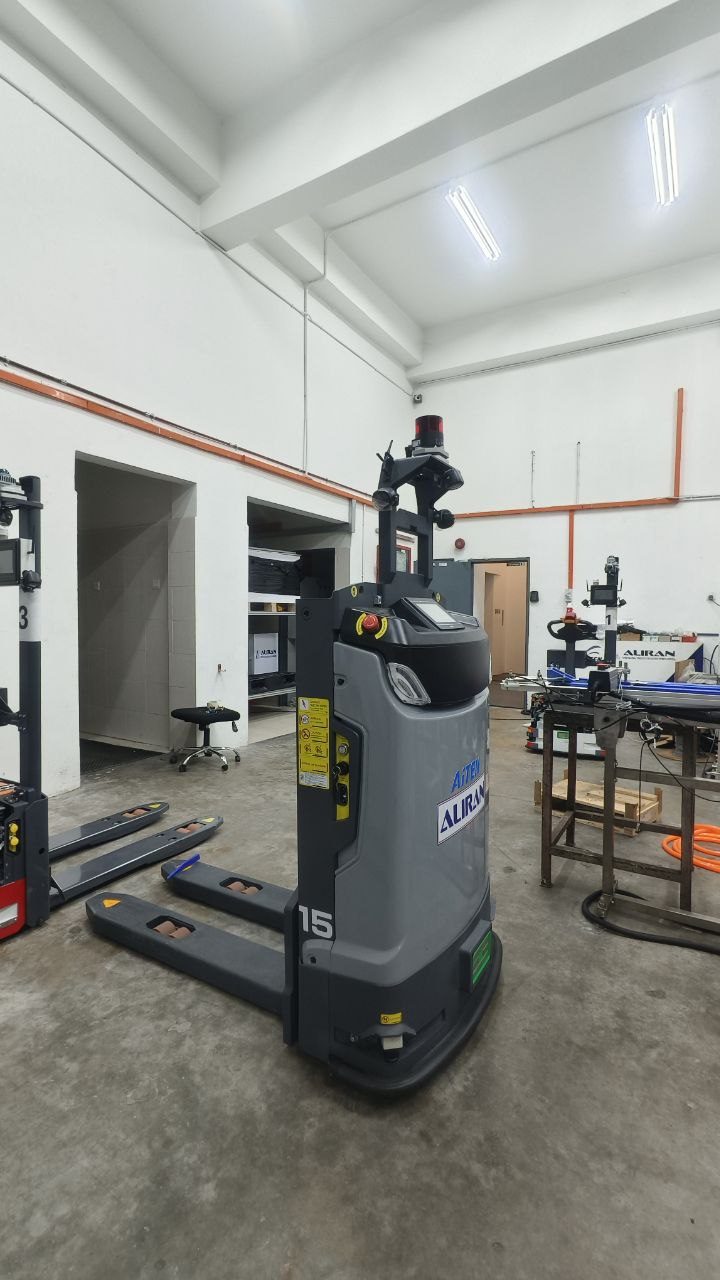
The whole promise of a collaborative robot is right there in the name. A cobot is built to share space with people, without the cages and light curtains that fence off a traditional industrial robot. That is what makes cobots so attractive for Malaysian factories that want automation without rebuilding their floor. But "collaborative" does not mean "automatically safe". It means safe when it is set up, programmed and operated correctly. This article walks through the safety standards and practices every Malaysian factory should understand before it puts a cobot next to a person, and why the safety knowledge matters as much as the programming.
Why cobot safety is different
A traditional industrial robot is fast, strong and dangerous, so we keep people out of its space with physical guarding. The safety model is simple: separate the human and the machine. A cobot flips that model. It is designed to work alongside people, which means the safety has to be built into how the robot behaves rather than into a fence around it.
That shift is powerful, because it removes the cost and space of heavy guarding. It is also a responsibility. The safety now depends on speed limits, force limits, sensing and how the specific task is designed, all of which are things your team configures. A cobot that is set up thoughtlessly can still hurt someone. A cobot that is set up properly can work safely within arm's reach. The difference is knowledge.
A cobot is not safe because it is a cobot. It is safe because someone who understood the standards set it up to be.
The four ways a cobot can work safely with people
International safety standards describe several methods by which a collaborative application can be made safe. You do not need to memorise the clause numbers, but every team running a cobot should understand these four approaches, because your application will use one or a mix of them.
1. Safety-rated monitored stop
The robot stops moving when a person enters the shared space, and resumes when they leave. The robot and human are not in motion together. This suits tasks where a person occasionally steps in to load or inspect, then steps back out.
2. Hand guiding
The operator physically moves the robot arm by hand, often to teach a position. The robot only moves under the operator's direct guidance. This is common during setup and teaching.
3. Speed and separation monitoring
The robot adjusts its speed based on how close a person is. As someone approaches, it slows down, and if they get too close it stops. Move away and it speeds back up. This keeps the robot productive while people are nearby but at a distance, and cautious when they are close.
4. Power and force limiting
This is the one most people picture when they think of cobots. The robot is designed and configured so that if it does contact a person, the force and pressure stay below levels that would cause injury. It senses unexpected resistance and stops. Getting this right depends on the payload, the speed, the tool and the specific contact scenario, which is exactly why it needs to be understood, not assumed.
The risk assessment: the step you cannot skip
Here is the single most important thing to understand about cobot safety. The robot on its own is not what you certify as safe. The application is. A cobot holding a soft, light part and moving slowly is a very different risk from the same cobot holding a sharp tool and moving quickly. The gripper, the workpiece, the speed and the layout all change the picture.
That is why every collaborative application needs a proper risk assessment before it goes live. You look at the task, identify where a person could be harmed, and decide which safety methods and settings bring the risk down to an acceptable level. Skipping this step is the most common and most dangerous mistake a factory can make with a cobot. A team trained to think this way treats the risk assessment as the foundation of the whole application, not as paperwork to be done afterward.
Common cobot safety mistakes
- Assuming the cobot is safe out of the box, without assessing the specific task, tool and speed.
- Adding a sharp or heavy end-effector without re-checking the force and pressure limits.
- Running the robot faster to hit a cycle time target, without re-evaluating the safety settings.
- Leaving safety-rated stop and interlock settings at defaults that do not match the real layout.
- Training operators to run the robot but not to understand why the safety limits are set the way they are.
Every one of these comes down to the same root cause: treating the cobot as a plug-and-play appliance rather than a system that has to be configured for its specific job. Training fixes that mindset.
What operators and technicians need to know
Different people need different depth, but everyone who works near a cobot should understand the basics. Operators need to know how the safety features behave, how to trigger a safe stop, and what to do and not do when working alongside the robot. Technicians and engineers need more: how to configure the safety settings, how to run the risk assessment, how to program paths that keep people safe, and how to maintain the system so the safety functions keep working.
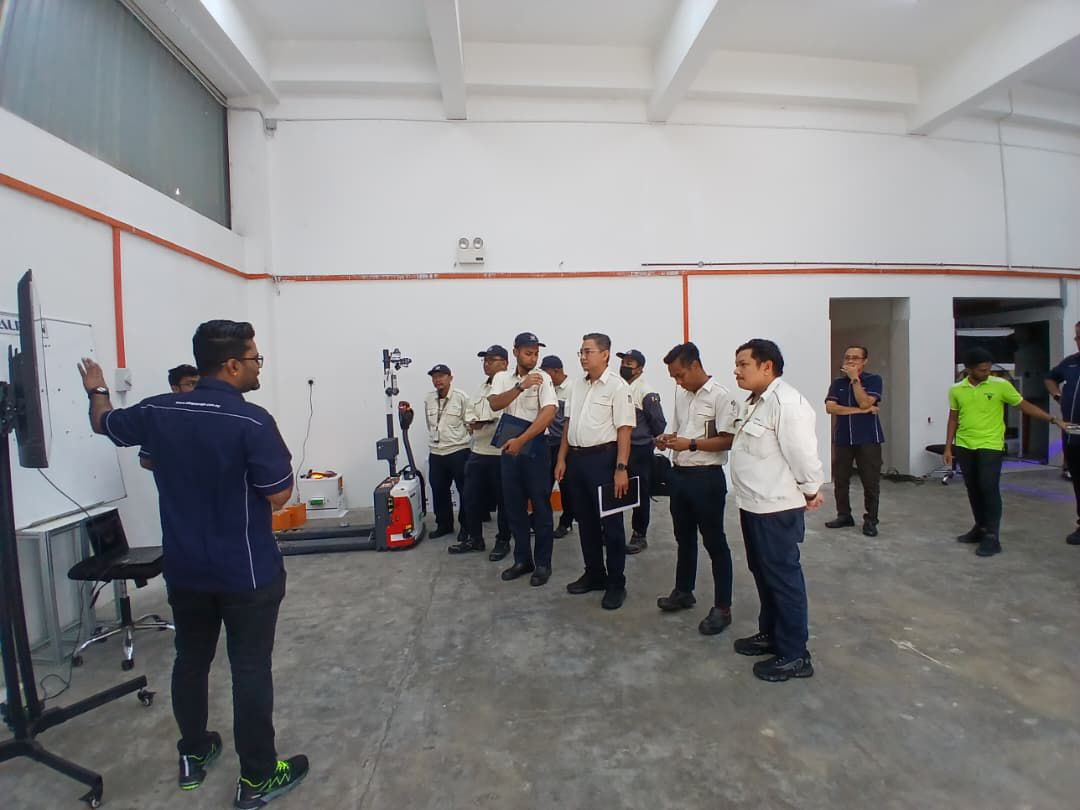
This is the core of our Cobot and Robot Basic Training. Over three practical days, the course spends real time on safety rules and standards, not as a lecture but woven through the hands-on work. Participants learn to program the robot with the teach pendant, operate it over wired and wireless connections, and carry out basic maintenance, all with the safety thinking built in. Confidence around a cobot comes from having stood next to a moving one and triggered a safe stop yourself, which is exactly what the training provides.
Cobots and PLCs: safety across the whole cell
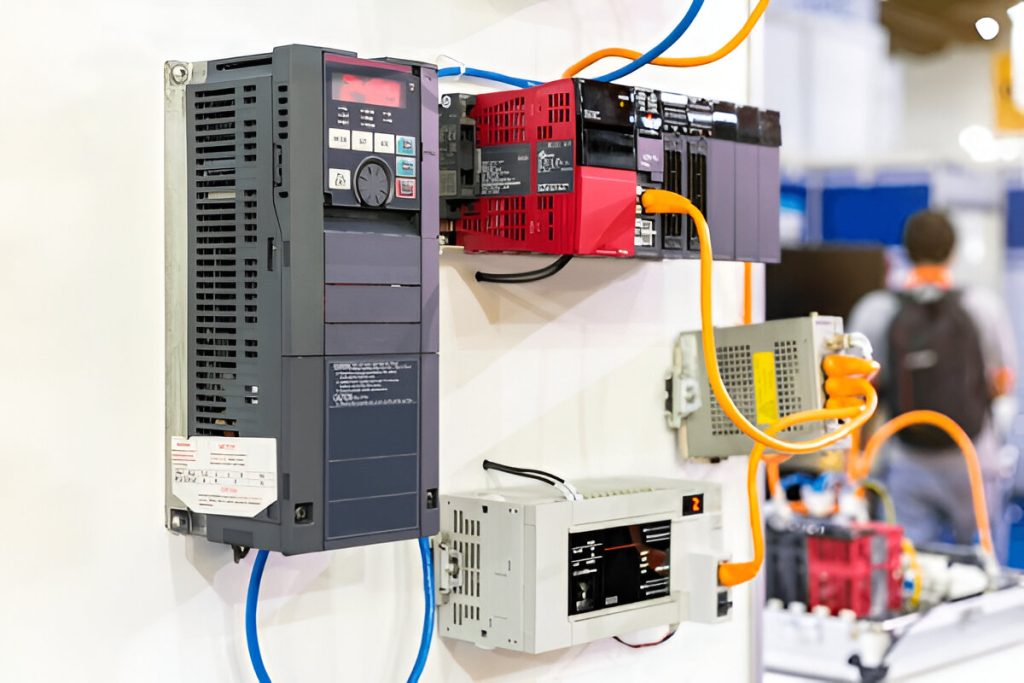
A cobot rarely works alone. It sits in a cell with conveyors, sensors, guards and stations, most of which are controlled by a PLC. Safety has to work across that whole cell, not just within the robot. Emergency stops, interlocks and safe states need to be coordinated between the PLC and the cobot so that when one part of the cell stops safely, the rest responds correctly.
This is why integration matters for safety, not just for productivity. Our PLC and Cobot integration training covers exactly this, teaching teams to configure safety-rated monitored stops and emergency interlocks across both the PLC and the cobot systems so the whole cell behaves safely as one. For any factory running a real collaborative cell rather than a single robot on a bench, that whole-cell safety understanding is essential.
Safety is also a productivity decision
It is tempting to see safety as the brake on productivity, the thing that slows the robot down. In practice, good safety design is what lets the robot run at all in a shared space. A cell that is set up correctly can keep a cobot working productively while people are nearby, using speed and separation monitoring to balance caution and output. A cell set up poorly either stops constantly, killing productivity, or runs unsafely, risking an incident that stops everything for far longer. Understanding the standards is what lets you find the setting that is both safe and productive.
Building a safety culture, not just a checklist
The strongest factories treat cobot safety as a habit rather than a one-time sign-off. Operators are briefed on what the robot will do before it starts. Any change to the tool, the speed or the task triggers a fresh look at the safety settings. Near-misses are discussed openly so the setup improves. None of this is complicated, but it only happens when the team understands the why behind the rules. Training builds that understanding, which is what turns a set of safety features into an actual culture of safety on the floor.
Frequently asked questions
Do cobots really not need any guarding? It depends entirely on the application. Many cobot tasks run safely without traditional guarding, but only after a risk assessment confirms it. Some applications, especially with sharp tools or heavy payloads, still need additional safety measures. The assessment decides, not the assumption.
Are cobots slower than industrial robots? Often yes, because the collaborative safety methods limit speed near people. That trade-off is the price of sharing space. Good setup keeps the robot as productive as safely possible.
Who is responsible for cobot safety, the maker or us? The robot maker provides a safe machine, but the safety of the complete application, including your tool, workpiece and layout, is the responsibility of whoever integrates and operates it. That is your team, which is why they need the knowledge.
Can our operators be trained quickly? Operators can learn the essentials fast. The deeper configuration and risk-assessment skills take a proper course, but a three-day hands-on program brings a technical team to a genuinely capable level.
Is cobot training HRD Corp claimable? For eligible employers, yes. We are a registered provider and prepare the paperwork so most of the cost is covered by your levy.
A note for Selangor and Klang Valley manufacturers
For factories across Subang Jaya, Shah Alam, Klang and the wider Selangor area bringing cobots onto the line, training locally on real collaborative robots makes the safety lessons concrete. Your team learns the standards, practises triggering safe stops, and configures a real cell, then applies it at a site nearby with support close at hand. Being based in Subang Jaya, we can look at your actual cell and help your people set it up safely and productively, rather than leaving them to interpret a standard on their own.
The bottom line
Cobots let Malaysian factories automate without caging off their floor, which is a genuine breakthrough. But that freedom rests entirely on getting the safety right, and safety with a cobot lives in the setup, the settings and the people, not in a fence. Understand the collaborative methods, always run the risk assessment, coordinate safety across the whole cell, and train the team so the safety thinking is second nature. Do that, and a cobot becomes exactly what it promises to be: a productive, reliable partner that works safely right next to your people. Contact us to arrange cobot training for your team, HRD Corp claimable where eligible.
The standards behind cobots, in plain terms
You will hear references to international standards when people talk about cobot safety. You do not need to memorise them, but it helps to know what they are for. There is a general standard for industrial robot safety, a technical specification written specifically for collaborative operation, and a broader machinery safety framework that sits behind all of it. Together they describe the collaborative methods discussed earlier and set out how to assess and reduce risk in a collaborative application. The practical takeaway is simple. These documents exist because collaborative safety is a real discipline with established rules, not something to improvise. A team trained in the standards works within a proven framework rather than guessing, which protects your people and your business.
Collaborative and non-collaborative tasks can share one robot
A subtle point that trips people up: the same cobot can run some tasks collaboratively and others behind guarding. A robot might work slowly and safely alongside a person for a delicate assembly step, then run faster inside a light-curtained zone for a heavier, faster part of the cycle where no person should be. The robot is collaborative-capable, but each task has its own risk profile and its own safety approach. Understanding this lets you get the most out of a cobot: full collaboration where it adds value, and faster guarded operation where it does not need a person nearby. A well-trained team designs applications that use the right mode for each part of the job.
Documentation and sign-off
Safety is not only about how the robot behaves. It is also about being able to show that you assessed the risks and set the application up responsibly. A proper deployment keeps a record of the risk assessment, the safety settings chosen, and the reasoning behind them. This matters if something ever goes wrong, and it matters for your own internal discipline. It also makes changes safer, because when someone later adjusts the tool or the speed, they can see what the original safety reasoning was. Training that covers the risk assessment properly teaches teams to document as they go, which turns safety from a memory in one person's head into a durable part of how the cell is run.
Operators and engineers need different depth
It is worth being clear about who needs to know what. Operators who work near the cobot day to day need to understand how it behaves, how to trigger a safe stop, and the simple rules of working alongside it. They do not need to configure the safety system. Engineers and technicians need the deeper layer: running the risk assessment, configuring the safety-rated functions, programming safe paths, and coordinating safety across the whole cell. A good training plan matches the depth to the role, giving everyone enough to be safe and giving the technical team enough to be responsible for the application. Our cobot course is aimed at that technical level, building the people who will set up and own the collaborative applications on your floor.
Reviewing safety as the application changes
A cobot application is rarely frozen. Products change, cycle times get pushed, tools get swapped, and layouts shift as the floor evolves. Every one of those changes can alter the safety picture, which is why safety is not a one-time sign-off but something to revisit whenever the application changes. A heavier gripper, a faster motion, a new fixture closer to where people stand, any of these can move a previously safe cell out of its safe envelope. The discipline that keeps a cobot safe over years is simple to state: when anything about the task changes, look again at the risk assessment and the safety settings before running in production. A team trained to think this way builds the habit into how they work, so safety keeps pace with the changes rather than quietly falling behind them. This is one more reason the knowledge matters more than the paperwork, because standards on a shelf do not notice when the tool changed, but a trained team does.
Getting expert eyes on your first cell
If your factory is setting up its first collaborative application, there is real value in having someone who understands the standards look at your specific cell rather than working purely from a manual. The reason is that safety lives in the particulars: your tool, your workpiece, your speed, your layout and where your people actually stand. A generic reading of a standard cannot see those particulars, but a trained pair of eyes on your real cell can spot the gripper that changes the force picture, the layout that puts a person in the wrong place, or the speed that needs a second look. This is part of why hands-on, local training is so useful for cobot safety. Your team learns the standards and then applies them to a real cell, ideally the kind of cell they will actually run, with guidance available as they set it up. That grounding turns abstract safety rules into a concrete, correctly configured application, which is the whole point.
Ready to train your team?
Our training programmes are HRD Corp claimable for eligible employers. Get a proposal in one working day.
Request a Quote