Everything a Malaysian factory needs to know about PLC training, what it covers, who should take it, and how HRD Corp can fund the whole thing.
If you run a factory or a maintenance team in Malaysia, you already know the pain. A machine stops, a red light blinks, and the whole line waits while one person who "knows the PLC" is called in. That one person is usually overworked, sometimes on leave, and occasionally about to retire. Programmable Logic Controllers sit at the heart of almost every automated machine on your floor, yet the number of technicians who can confidently work on them has not kept pace with how fast machines have become. This guide walks through what PLC training in Malaysia really involves in 2026, who needs it, what it costs, and how to make sure the investment actually sticks.
What a PLC actually does, in plain terms
A Programmable Logic Controller is a rugged industrial computer built to control machinery. It reads inputs from sensors and switches, runs a program that decides what should happen, and sends outputs to motors, valves, lights and actuators. When a conveyor starts because a box breaks a photo-eye, that decision was almost certainly made by a PLC. When a stamping press refuses to cycle because a guard door is open, that is the PLC enforcing a safety interlock.
The reason PLCs matter so much is that they are the brain between your sensors and your machinery. A mechanical fault is usually visible. A PLC fault is not. A technician can spend hours chasing a "broken" motor when the real problem is a single rung of logic waiting for an input that never arrives. That is exactly the gap good training closes.
Why the PLC skills gap is so wide in Malaysia
Malaysian manufacturing has automated quickly over the last decade, especially in the Klang Valley, Penang and Johor. Electronics, food processing, automotive and logistics have all added machines that depend on PLCs, HMIs, drives and industrial networks. The problem is that recruiting and training did not move at the same speed.
Most maintenance teams are strong on mechanical and electrical work. They can change a bearing, rewire a panel and read a schematic. Fewer are comfortable opening a running PLC program, reading ladder logic, and working out whether the fault is in the software or the hardware. When that skill lives in one or two people, every unplanned stop becomes a bottleneck around those people.
The most expensive machine on your floor is the one nobody on shift can troubleshoot. Training is almost always cheaper than the downtime it prevents.
There is also a generational shift happening. Experienced automation engineers are retiring, and they take undocumented knowledge with them. Bringing younger technicians up to a useful PLC level is not a nice-to-have. For many plants it is now a continuity risk.
What you actually learn in a PLC course
A practical PLC course is not a lecture about theory. It should get participants standing in front of real hardware within the first day. At our centre, the Programmable Logic Controller Basic Training is a focused two-day program built around exactly this idea. Here is the shape of what strong PLC training covers.
PLC fundamentals and hardware
You start with the parts. What the CPU does, how the power supply feeds the rack, and the difference between digital and analog input and output modules. Trainees learn to map a real sensor to a real input address, and a real output address to a real actuator. This sounds basic, but it is the foundation everything else stands on. If you cannot trace a signal from the field device to the program, you cannot troubleshoot it.
Ladder logic programming
Ladder logic is the language most factory PLCs speak. It looks like an electrical schematic on purpose, so electricians can read it. Training covers contacts, coils, timers, counters and the basic instructions that make up ninety percent of real programs. The goal for most maintenance staff is not to write a huge program from scratch. It is to open a running program and understand what it is doing, so they can find the rung that is holding the machine.
Communication and I/O testing
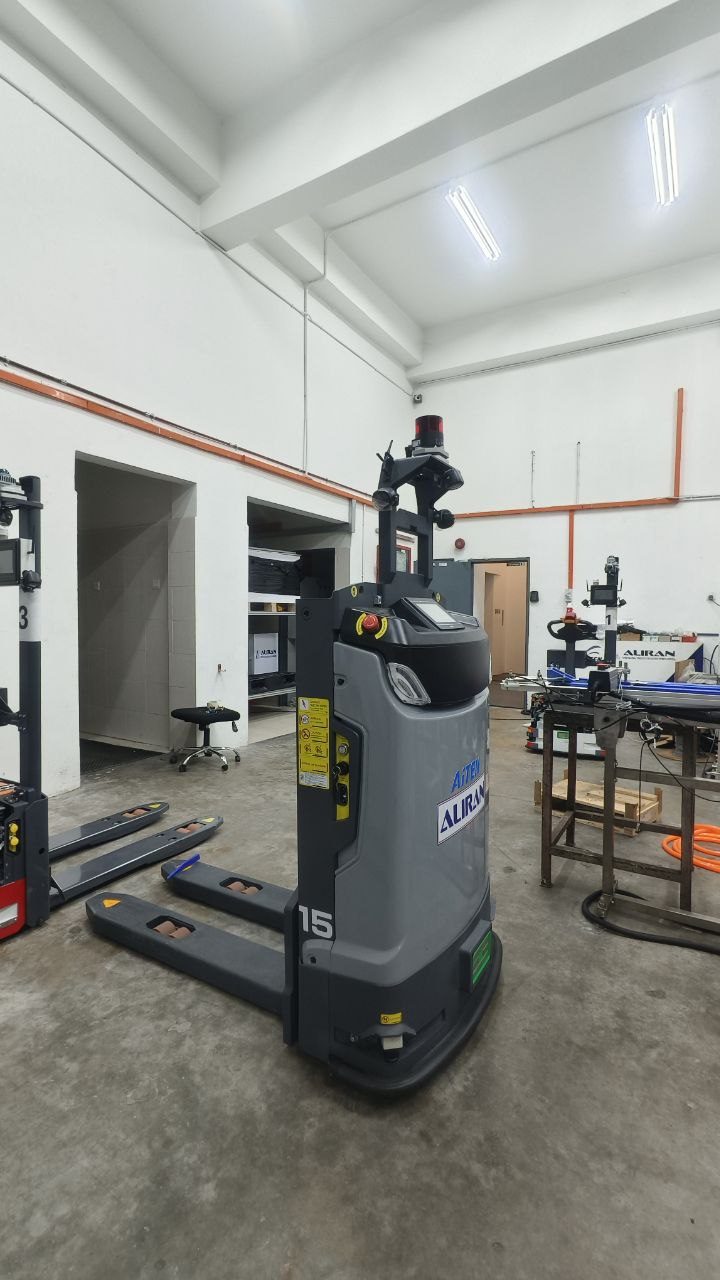
Modern machines rarely work alone. A PLC talks to an HMI touchscreen, a variable speed drive, and sometimes a robot or an autonomous mobile robot. Good training introduces the common communication protocols and shows how to test inputs and outputs safely, so a technician can confirm whether a fault sits in the field wiring, the module, or the logic.
Servicing, maintenance and troubleshooting
The part maintenance teams value most. Reading fault codes, checking the obvious causes first, taking program backups, and knowing when to escalate. A calm, structured approach to a fault at four in the afternoon is worth more than any single clever trick.
Which PLC brand should you train on?
Malaysian factories run a mix of brands. OMRON, Siemens, Mitsubishi and Allen-Bradley are all common, and each has its own software. This worries a lot of managers, who assume training on one brand is useless on another. In practice the core concepts transfer almost completely. Ladder logic, I/O mapping, timers and troubleshooting logic are the same ideas everywhere. Once a technician understands one platform well, learning a second is mostly about the software interface, not the fundamentals.
Our PLC training is built around OMRON hardware and the Sysmac Studio environment, which is widely used across Malaysian industry. The skills a participant builds transfer directly to the OMRON machines many plants already run, and give a strong base for picking up other brands later.
How much does PLC training cost in Malaysia?
Prices vary a lot depending on duration, whether it is public or in-house, and how much hands-on time you get. Some providers run short awareness sessions of a few hours. Others run months-long certification tracks. For a working maintenance team, a focused two or three day program on real hardware usually gives the best return, because people leave able to do something new immediately.
The more important number is not the course fee. It is the cost of the downtime you are trying to prevent. A single unplanned line stop can cost more in an afternoon than a whole team's training. When you frame it that way, the question stops being "can we afford the training" and becomes "can we afford to keep depending on one person".
How HRD Corp makes PLC training almost free for employers
This is the part many Malaysian employers underuse. If your company contributes to the Human Resources Development Corporation levy, you can claim training costs back under the SBL-Khas scheme. Our centre is an HRD Corp registered training provider, serial number 202501044803, so our PLC and automation courses qualify.
The flow is simple. You choose the course and dates, submit a grant application through your HRD Corp employer portal before the course starts, and attach the quotation, trainer profile and course outline that we provide. Once the grant is approved, your team attends, we handle the attendance records and post-training report, and HRD Corp reimburses the approved amount. For most of our clients that covers the full course fee, which means the real out-of-pocket cost of upskilling the team is close to zero.
If you are not sure whether your company is registered or how much levy you have available, that is worth a five minute conversation. Many employers have levy sitting unused that could be paying for exactly this kind of training.
In-house versus public PLC training
Both have a place. Public courses suit companies sending one or two people, or individuals who want to upskill on their own. In-house training suits teams of five or more, because the content can be tuned to the machines you actually run, and everyone learns the same standard at the same time.
In-house also has a quieter benefit. When a whole shift trains together, they build a shared language for talking about faults. Instead of one expert and a room of people waiting, you get a team that can reason about a problem together. That change in team dynamics often matters more than any single skill.
Signs your team needs PLC training now
- Only one or two people can touch the PLC, and everything waits for them.
- Downtime drags on because nobody can tell if a fault is mechanical, electrical or in the program.
- You are bringing in new automated machines faster than your team can keep up.
- A key automation person is close to retirement and the knowledge is not written down.
- You rely on the machine builder or an outside contractor for every small change, and it is slow and expensive.
If two or more of these sound familiar, the gap is already costing you. The good news is that it is one of the easier gaps to close, because a short practical course gets most technicians to a genuinely useful level.
What good PLC training looks like day to day
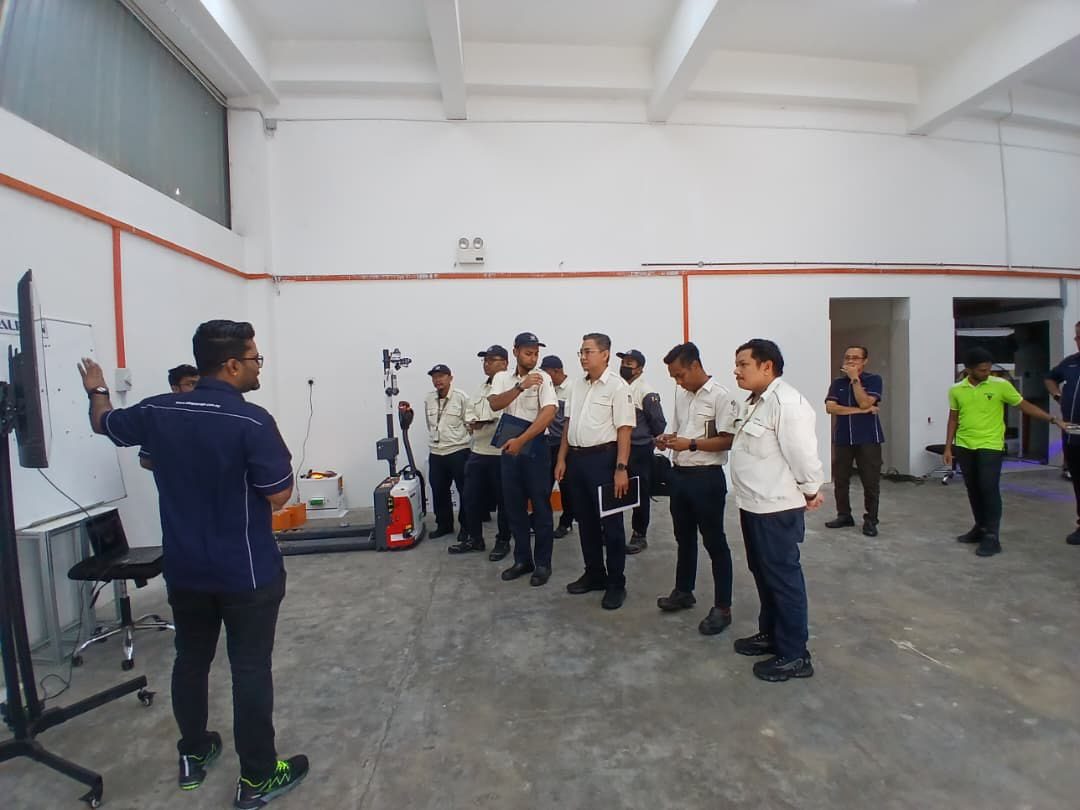
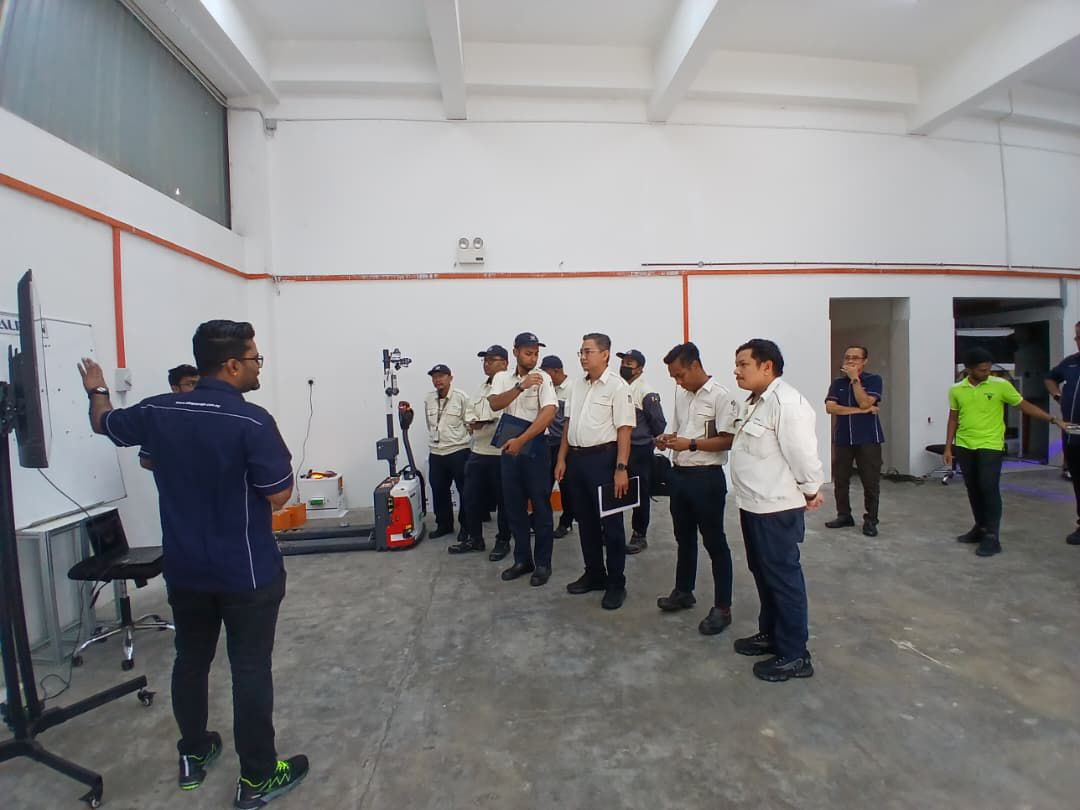
A well-run course keeps groups small on purpose. Real hardware only teaches you something when you get your hands on it, and that does not happen in a hall of fifty people. On day one the group works through fundamentals and starts inside the programming environment. By day two they are building simple logic, testing I/O against real devices, and finishing with a mini project that ties the pieces together. People leave having done the work, not just watched it.
The trainers matter as much as the syllabus. Ours bring decades of real industrial and instructor experience, including work with major Malaysian industrial names, so the examples come from the plant floor rather than a textbook. When a trainee asks "but what happens when the drive faults mid-cycle", the answer comes from someone who has stood in front of that exact problem.
Building on PLC: where the skills lead next
PLC is the natural first step into industrial automation, but it is rarely the last. Once a technician is comfortable with controllers, the door opens to the systems PLCs increasingly talk to. Collaborative robots and autonomous mobile robots both rely on tight coordination with PLC logic, and that is where the real productivity gains on modern lines come from.
That is why we offer training that goes beyond the standalone controller. A team that has done PLC basics can move on to PLC and Cobot integration or PLC and AMR integration, where they learn to wire the brain of the line to the robots that move and assemble product. For many Malaysian factories heading toward Industry 4.0, that integration skill is the difference between islands of automation and a floor that works as one system.
How to get started
Start by being honest about where your team sits today. Are they strong mechanically but shaky on controllers? That is the most common gap we see, and it is the easiest to close. From there, decide whether you are sending a couple of people to a public course or training a whole shift in-house.
Then let us handle the rest. Tell us what machines you run and what you are trying to achieve, and we will recommend the right course rather than the longest one. We will prepare the HRD Corp paperwork so the levy does the heavy lifting on cost, and we will keep the groups small so your people actually leave able to do the work.
PLC skills are among the highest-leverage things you can add to a Malaysian maintenance team in 2026. The machines are only getting smarter. The teams that can confidently work on the brains behind them are the ones that keep running while everyone else waits for the one person who knows the PLC.
Ready to close the gap? Contact us for a training quote and we will put together a proposal, HRD Corp claimable where eligible, within one working day.
The most common PLC faults, and how training changes the response
To see why training pays off, it helps to look at the faults maintenance teams actually meet. Almost every unplanned stop on a PLC-controlled machine falls into a handful of categories, and a trained technician handles each one very differently from an untrained one.
The waiting input. A machine sits idle with no obvious cause. The program is waiting for an input that never arrives, perhaps a proximity sensor that has drifted, a limit switch that is stuck, or a photo-eye covered in dust. An untrained technician replaces parts hoping to get lucky. A trained one opens the program, finds the rung that is holding, sees which input it is waiting for, and goes straight to that sensor. Minutes instead of hours.
The communication drop. The HMI freezes or a drive stops responding. The machine looks dead, but the mechanical parts are fine. The fault is in the network between devices. A technician who understands how the PLC talks to the HMI and the drive checks the link first, rather than tearing into the machine.
The safety interlock. A guard door, light curtain or emergency stop is not fully reset, and the PLC is correctly refusing to run. This is the system doing its job, but to an untrained eye it looks like a fault. Training teaches people to read the safety logic and confirm the interlock chain before assuming something is broken.
The corrupted or lost program. After a power event or a failed change, the program behaves oddly or will not load. A team trained to keep regular backups restores in minutes. A team without backups can lose a full day and a lot of money. This single habit, taught in any decent course, often pays for the training on its own.
A day in the life: before and after training
Picture a food packaging line in Shah Alam. A filler stops mid-shift. Before training, the two people who know the PLC are both off site. The line supervisor calls the machine builder, waits for a callback, and loses three hours of production while everyone stands around. The eventual fix is a five minute sensor adjustment.
Now picture the same line after the maintenance team has been through a proper PLC course. The technician on shift opens the program on a laptop, sees the fill cycle is waiting on a level sensor input, walks to the sensor, finds it fouled with product, cleans and re-seats it, and the line is running again in twenty minutes. No callback, no waiting, no three hour hole in the day. That gap, repeated across a year, is the real return on training.
Frequently asked questions about PLC training in Malaysia
Do my technicians need an engineering degree? No. The most valuable outcomes, reading logic and troubleshooting faults, are well within reach of any competent electrician or maintenance technician. A short practical course on real hardware gets most people to a genuinely useful level, and they keep improving once they are back on the floor using it.
How long before the training pays off? Usually the first serious fault after the course. Once a technician saves one long downtime event by finding a fault quickly, the course has often paid for itself, especially when the fee was HRD Corp claimable in the first place.
We run Siemens, not OMRON. Is the training still useful? Yes. The concepts transfer almost completely. Ladder logic, I/O mapping, timers, counters and troubleshooting logic are the same ideas on every platform. The main difference between brands is the software interface, which is quick to pick up once the fundamentals are solid.
Can you train at our site? Yes. In-house training suits teams of five or more and lets us tune the examples to the machines you actually run. Public sessions suit one or two people. We can advise which fits your situation.
Is it really claimable under HRD Corp? For eligible employers, yes. We are a registered provider and we prepare the paperwork you need to submit your SBL-Khas application before the course starts.
The bottom line for Malaysian factories
PLC training is one of the highest-leverage investments a Malaysian manufacturer can make in its own resilience. It takes the knowledge that currently lives in one or two heads and spreads it across the team. It turns long, panicky downtime into short, calm fixes. And because the levy you already pay can cover most or all of the cost, the barrier to starting is far lower than most employers assume. The machines on your floor are only getting smarter. The question is whether your people are ready to keep them running.
Ready to train your team?
Our training programmes are HRD Corp claimable for eligible employers. Get a proposal in one working day.
Request a Quote