Owning automation is not the same as integrating it. How PLCs, cobots and AMRs actually talk to each other, and the skill that makes them work as one.
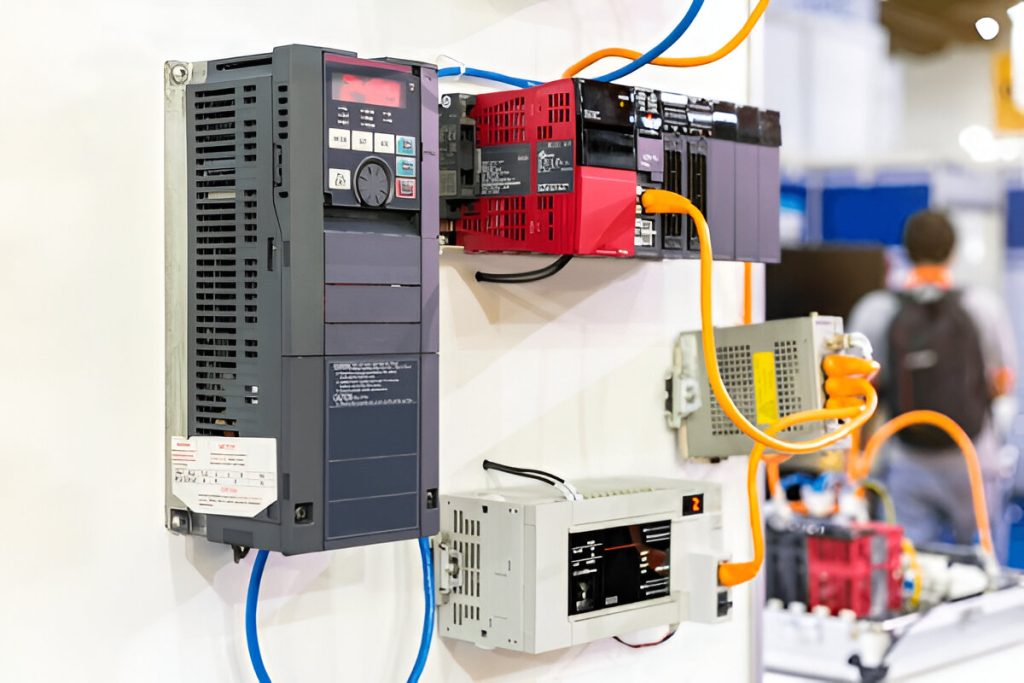
Plenty of Malaysian factories now own automation. They have a PLC-controlled line here, a cobot on a bench there, maybe an autonomous mobile robot moving totes across the floor. What many of them do not yet have is these systems working together. A robot that can move a part is useful. A robot that can tell a PLC it has arrived, wait for a door to open, trigger a conveyor and hand off cleanly is part of a genuinely automated flow. That handshake between control systems and robots is where the real productivity lives, and it is a specific skill. This article explains how PLCs, cobots and AMRs actually talk to each other, and what your team needs to learn to make them work as one.
The difference between automation and integration
It helps to be precise about words. Automation is a single machine doing a job on its own. Integration is separate machines coordinating so the whole process runs without a person stitching the steps together. A stamping press that cycles automatically is automation. That press feeding parts to a cobot that assembles them, while an AMR delivers the raw material and carries away the finished goods, all triggered by signals passing between the systems, is integration.
The gap between the two is where a lot of Malaysian factories are stuck right now. They have bought islands of automation, but the islands do not talk. A person still carries the part from the press to the cobot, or presses a button to tell the next machine to go. Integration removes those manual joins, and that is where cycle times drop and consistency rises.
Isolated machines automate a step. Integrated machines automate the flow. The flow is where the money is.
How a PLC talks to a robot
At the heart of integration is communication. The PLC and the robot need to exchange signals so each knows what the other is doing. There are a few ways this happens, and a team does not need to master every protocol to get started, but they need to understand the idea.
Digital signals and interlocking
The simplest and most common approach is to exchange digital signals. The PLC sends the robot a signal that means "part is ready, go", and the robot sends back "done, clear to proceed". These handshake signals are called interlocks, and they are the backbone of most integrated cells. Done well, they ensure the two machines never step on each other, because each waits for the other's confirmation before it moves. Done badly, they cause collisions, jams and stops.
Network communication
Beyond simple signals, PLCs and robots increasingly exchange richer information over industrial networks, sharing data like positions, part types and status in real time. This is what allows more flexible cells, where the robot adapts based on what the PLC tells it about the incoming product. For an AMR fleet, a similar principle lets the dispatch system and the plant's control systems coordinate deliveries with production.
The safe state
Integration is not only about running. It is about stopping safely together. When one part of the cell hits an emergency stop or a fault, the others need to respond correctly, going to a safe state rather than carrying on blindly. Coordinating safety across the PLC and the robot is a core part of real integration, and it is one of the areas where untrained teams most often get it wrong.
PLC and AMR: coordinating the moving parts
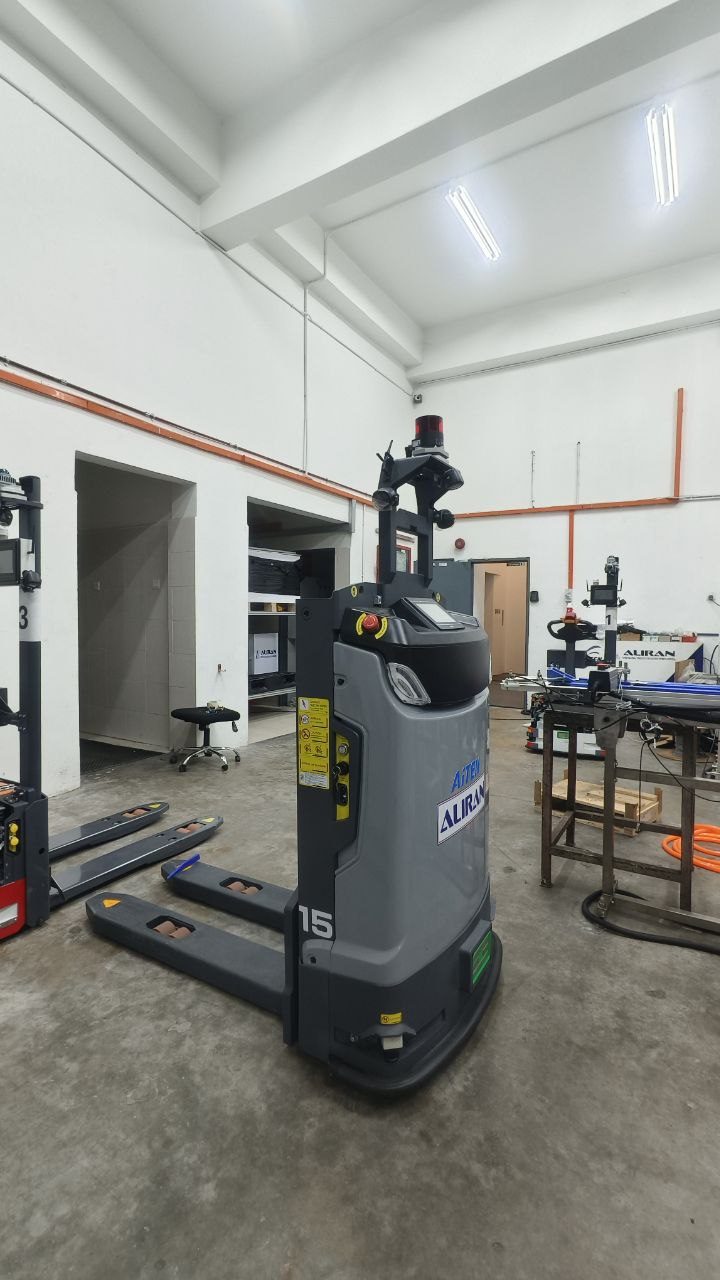
Autonomous mobile robots add a moving dimension to integration. An AMR delivering material to a workstation needs to coordinate with the fixed automation at that station. It should signal its arrival, wait for the station to be ready, allow the transfer, and then be released to its next task. On the fixed side, a PLC manages the station, the transfer mechanism and any doors or lifts along the way.
Getting this handshake right is what turns an AMR from a robot that drives to a spot into a robot that is part of the production process. Our PLC and AMR integration training is built around exactly this. Over five days, teams learn PLC fundamentals and programming, then AMR mapping, navigation and fleet dispatch, and finally how to establish communication and interlocking so the PLC and the AMR fleet work as a single coordinated system. It is our most popular integration course precisely because this bridge between fixed and mobile automation is where so many factories want to get to.
PLC and cobot: building a real cell
The cobot version of integration is about building a working cell where a collaborative robot and PLC-controlled equipment cooperate on a task like assembly, machine tending or pick-and-place. The PLC manages the surrounding equipment and the process logic. The cobot does the flexible, dexterous work. Between them, interlocking signals keep everything in sync, and coordinated safety keeps people protected.
Our PLC and Cobot integration training takes teams through this over five days, from PLC fundamentals and cobot basics, through building the ladder logic and teaching the robot paths, to establishing the communication links and interlocking signals between the PLC and the cobot controller. It finishes with a hands-on project where participants design and run a complete integrated automation cycle themselves. That final project is the point, because integration is a skill you only really own once you have wired two systems together and watched them cooperate.
Why integration skills are scarce, and valuable
Here is the reality of the Malaysian job market. Plenty of people can do one side. There are technicians who know PLCs and technicians who know robots. Far fewer can do both and, crucially, make them talk to each other. That combination, the ability to sit between the control system and the robot and get them coordinating cleanly, is one of the most valuable and least common skills on the floor.
For a factory, growing that skill in-house is a strategic move. It means you can build and modify integrated cells without depending on a system integrator for every change. For an individual technician, it is a career accelerator, because integration skills are exactly what employers struggle to find. This is why we teach both sides together in one course rather than as two separate tracks. You learn the PLC, you learn the robot, and then you wire them together, which is how the skill actually gets used in real life.
The common integration mistakes
- Treating the two systems as separate projects, so the handshake between them is an afterthought.
- Weak or missing interlocks, so the machines occasionally collide or jam when timing slips.
- Safety coordinated poorly, so an emergency stop on one machine leaves the other in an unsafe state.
- Relying entirely on the integrator, so nobody in-house can adjust the cell when the product changes.
- Underestimating the wifi and network needs of a mobile robot working with fixed control systems.
Every one of these is avoidable with the right knowledge. A team that understands both sides designs the handshake carefully from the start, tests the interlocks, coordinates the safe states, and can adjust the cell when needs change.
Where to start with integration
You do not need to jump straight into a complex integrated cell. The sensible path builds up. If your team is new to controllers, start with PLC basics so they understand the brain of the line. If the robot side is new, a cobot or AMR course builds that foundation. Then the integration course ties the two together.
For teams that already have both foundations, the five-day integration courses save time by teaching both sides and the handshake in one focused program. Either way, the destination is the same: a team that can look at two separate machines and confidently make them work as one coordinated system.
Integration and Industry 4.0
Integration is the practical heart of what everyone calls Industry 4.0. The vision of a smart, connected factory, where machines share data and coordinate without constant human intervention, is built one integrated cell at a time. A factory does not become Industry 4.0 by buying a piece of software. It gets there by connecting its automation into flows that run themselves, and that starts with the ability to make a PLC and a robot cooperate. Teams that own the integration skill are the ones who can actually build toward that vision rather than just talk about it.
Frequently asked questions
Do we need to know every communication protocol? No. You need to understand the principle of exchanging signals and interlocking, and how to use the specific methods your equipment supports. Training focuses on the practical approaches you will actually use.
Can one course really cover both PLC and robot? Yes, and it should, because that is how the skill is used. Our five-day integration courses deliberately teach both sides and then combine them in a project, rather than leaving you to bridge the gap yourself.
Is integration only for big factories? Not at all. Even a small operation benefits from removing the manual joins between machines. Integration scales down as well as up.
Will our maintenance team cope with integration training? If they have a foundation in PLC or robotics, yes. If they are starting fresh, we sequence the basics first so the integration course lands on solid ground.
Is it HRD Corp claimable? For eligible employers, yes. We are a registered provider and prepare the SBL-Khas paperwork so most of the cost is covered by your levy.
A note for Selangor and Klang Valley factories
For manufacturers across Subang Jaya, Shah Alam, Klang and the wider Selangor industrial area, building integration skills locally means your team can learn on real PLC and robot hardware and then apply it at a site close by. Being based in Subang Jaya, we can look at the actual machines you want to connect and shape the training around your real integration goals, which is far more useful than a generic example. When your team can build and adjust integrated cells in-house, you stop waiting on outside integrators for every change and start moving at your own pace.
The bottom line
Owning automation is not the same as integrating it. The factories that pull ahead are the ones that connect their machines into flows, and that depends on a specific, scarce skill: making a PLC and a robot talk to each other cleanly and safely. That skill is learnable, it is one of the most valuable things a Malaysian technician can hold, and it is exactly what our integration courses are built to teach. Start with the foundations, then wire the two sides together in a real project, and your team gains the ability to turn islands of automation into a floor that runs as one. Contact us for an integration training quote, HRD Corp claimable where eligible, and we will build it around the systems you actually run.
A worked integration example, step by step
To make integration concrete, walk through a simple machine-tending cell. A CNC machine finishes a part. A PLC controls the machine and knows when the cycle is done. A cobot needs to open the door, remove the finished part, load a new blank, and let the machine start again. Here is how the handshake works. The PLC signals the cobot that the cycle is complete and the door is open. The cobot confirms it has received the signal, moves in, removes the part, loads the blank, and retreats to a safe position. The cobot then signals the PLC that it is clear. The PLC closes the door and starts the next cycle. Around this loop, safety interlocks ensure the cobot never enters while the machine is running and the machine never starts while the cobot is inside. That entire cooperation is built from a handful of well-designed signals, and getting it right is exactly what integration training teaches.
Communication protocols without the jargon
Integration involves protocols with intimidating names, but the ideas underneath are simple. At the most basic level, machines exchange digital signals, single on-or-off messages like "ready" and "done". This is enough for many cells. For richer coordination, machines communicate over industrial Ethernet networks that carry more detailed information, like part types, positions and status, in real time. A team does not need to master every protocol on day one. They need to understand the difference between simple signal exchange and networked communication, and how to use whichever their specific equipment supports. Training focuses on the practical methods you will actually use, so the protocols become tools rather than obstacles.
Testing and commissioning an integrated cell
Building the logic is only half the job. An integrated cell has to be tested carefully before it runs in production, because the failure modes involve two machines interacting. Good commissioning walks through every handshake, deliberately checks what happens when timing slips or a signal is missed, and confirms that an emergency stop on any part of the cell brings the whole thing to a safe state. This structured testing is where a trained team earns its value, because they know what to check and what can go wrong. An untrained team tends to test only the happy path, where everything works, and gets surprised later when reality throws an edge case. Learning to commission an integrated cell properly is part of what our integration courses cover through their hands-on final project.
The quiet cost of not integrating
It is worth naming what staying un-integrated actually costs. Every manual join between machines is a person spending time moving parts or pressing buttons that a signal could handle. It is a point where errors creep in, where the pace is limited by human speed, and where consistency suffers. Across a shift and across a year, those manual joins add up to real lost capacity and real quality variation. Integration removes them, and the gain is often larger than people expect because it compounds across every cycle. Factories that put off integration are quietly paying for it every day in slower, less consistent flows, while their competitors who invested in the skill pull steadily ahead.
Starting small and growing the integrated floor
You do not integrate a whole factory in one project, and you should not try. The sensible path is to integrate one cell well, learn from it, and expand. Connect a single PLC-controlled machine to a single robot, get the handshake solid, prove it in production, and let your team build confidence on something contained. That first working integrated cell teaches more than any amount of theory, and it gives your people the pattern they will reuse on the next one. From there, the integrated floor grows cell by cell: another machine and robot pair, then a mobile robot tying stations together, then flows that span several cells. Each step reuses the skills and the thinking from the last, so the pace picks up as your team gets fluent. This staged approach keeps risk low and momentum high, and it means every integration project is built by people who have done it before rather than gambling on a big-bang transformation. It is also exactly why we teach integration through a hands-on project, so your team leaves having built a real integrated cell they can repeat and scale.
Ready to train your team?
Our training programmes are HRD Corp claimable for eligible employers. Get a proposal in one working day.
Request a Quote