Get your first collaborative robot right and it pays back for years. The buying decision, and the part most people forget: making sure your team can run it.
Buying your first collaborative robot is a bigger decision than the price tag suggests. Get it right and you have a flexible, tireless worker that pays back for years and opens the door to more automation. Get it wrong and you have an expensive arm sitting in a corner because it does not quite fit the job, or because nobody on the team can program it. This guide walks a Malaysian manufacturer through choosing a first cobot the smart way, covering both the buying decision and the part most people forget: making sure your team can actually run it.
Start with the job, not the robot
The most common mistake is falling in love with a robot before deciding what it is for. Cobots are impressive, and it is easy to buy one and then look for a job to give it. That is backwards. The right approach is to identify a specific, repetitive task that is costing you time or people, and then choose the robot that fits that task.
Good first-cobot tasks share a few traits. They are repetitive and consistent, so the robot's steadiness is an advantage. They tie up a person doing something dull, so freeing that person adds value. And they are well defined, so the robot's job is clear. Machine tending, pick-and-place, simple assembly, palletising and inspection loading are all classic first jobs. Pick the task first, and the robot choice becomes much clearer.
Do not buy a cobot and look for a job. Find the job that is costing you, then buy the cobot that fits it.
The key specifications to understand
Once you know the job, a handful of specifications matter more than the rest. You do not need to be an engineer to understand them, but you should be able to talk about them with a supplier.
Payload
How much weight the robot can handle, including the gripper or tool, not just the part. It is a common error to size the payload to the part and forget the weight of the end-effector. Choose a robot with comfortable margin over what the job actually needs.
Reach
How far the arm can extend. The robot has to comfortably reach every point in its task, from where it picks up to where it puts down, without straining at the edge of its envelope. Map the real distances of your job before choosing.
Repeatability
How precisely the robot returns to the same position each time. Some jobs need tight precision, others are forgiving. Match the repeatability to what the task genuinely requires rather than overpaying for precision you do not need.
Ease of programming
How straightforward it is for your team to teach and adjust the robot. This matters enormously for a first cobot, because the whole point is that your own people can set it up and change it as needs shift. A robot that is powerful but painful to program will frustrate your team into leaving it idle.
The specification everyone forgets: your team
Here is the specification that does not appear on any datasheet but decides the success of the whole project: can your team run it? A cobot is only as useful as the people who program, adjust, maintain and troubleshoot it. If the plan is that the supplier programs it once and nobody in-house can change it, you have bought a very expensive fixed machine, and the moment your product or process changes, you are stuck.
The whole promise of a cobot is flexibility, and flexibility only exists if your team can reprogram the robot for new tasks. That is why training is not an optional extra bolted on after the purchase. It is part of the purchase. The factories that get real value from their first cobot are the ones whose people can teach it a new job in an afternoon, not the ones waiting weeks for the supplier to visit.
What your team needs to learn
To genuinely own a cobot, your team needs a specific set of skills. They need to program the robot with the teach pendant, creating and editing the movements that make up a task. They need to understand the safety standards and set the robot up to work safely near people. They need to connect and configure it, over wired and wireless connections. And they need to maintain and troubleshoot it, so a small issue does not become a long stoppage.
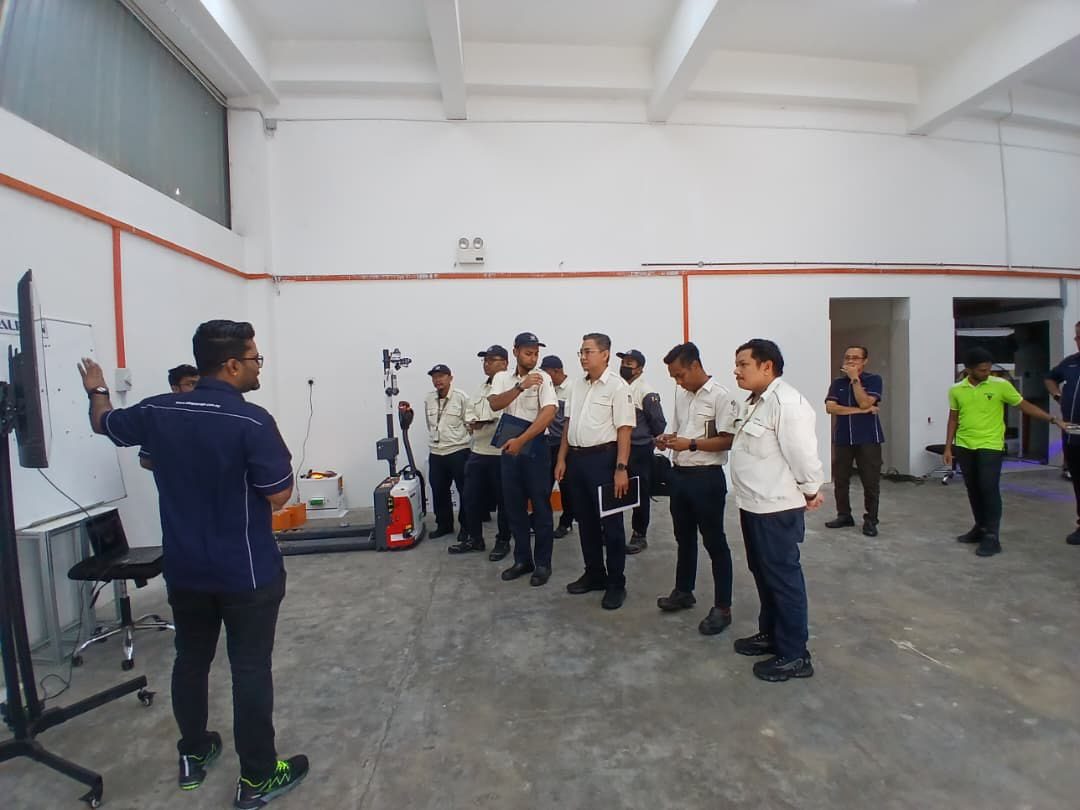
This is exactly what our Cobot and Robot Basic Training covers. Over three practical days, participants move from robotics basics through hands-on programming with the teach pendant, safety rules and standards, wired and wireless operation, and basic maintenance, finishing with a mini project where they build a structured task themselves. By the end, your team can take the cobot you bought and actually put it to work, and put it to new work as your needs change.
The end-effector matters as much as the robot
A cobot arm on its own does nothing. What it holds, the gripper or tool at the end, is what does the work. Choosing the right end-effector for your job is as important as choosing the arm. A gripper for delicate parts is different from one for heavy items, and a specialised tool for a specific process is different again. This choice also feeds back into safety, because a sharp or heavy tool changes the force and pressure picture entirely. Your team needs to understand end-effectors as part of running the cobot well, which is another reason the people side cannot be an afterthought.
Safety is part of the buying decision
Because a cobot works near people, safety is not something you sort out after installation. It shapes the whole application. The specific task, the tool, the speed and the layout all determine what safety measures the application needs, and that requires a proper risk assessment. A cobot is safe when it is set up correctly for its job, not simply because it is a cobot. A team that understands the collaborative safety methods can set up an application that is both safe and productive, which is the balance every deployment needs. This safety understanding is built into good cobot training, because programming a robot you cannot make safe is not much use.
Planning for more than one
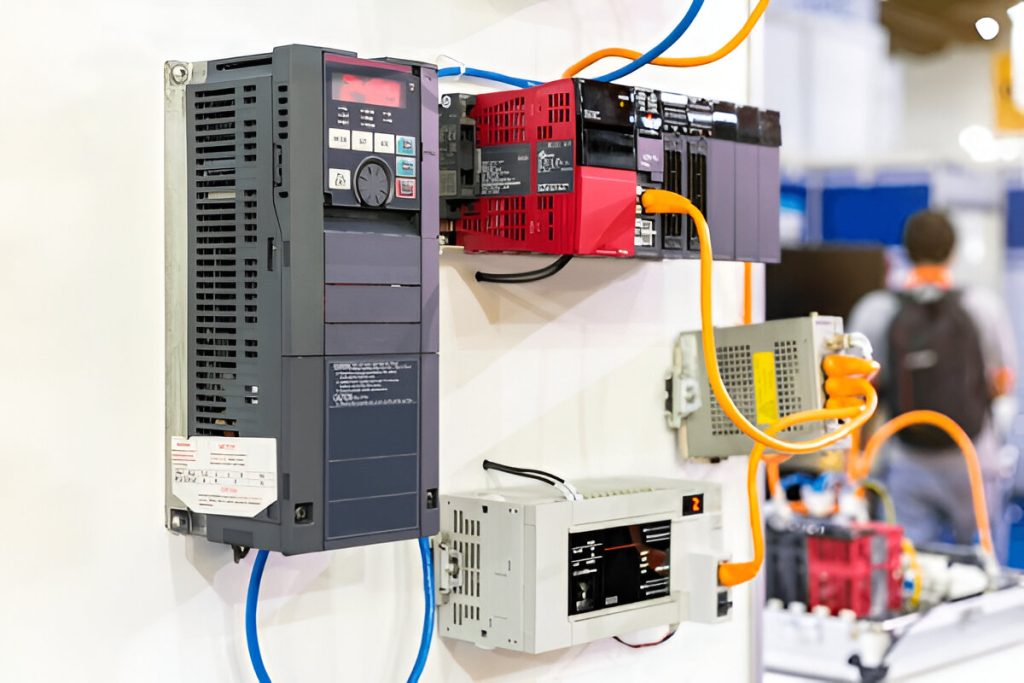
Your first cobot is rarely your last. Most manufacturers who deploy one successfully find more jobs for cobots, and some move toward integrated cells where a cobot coordinates with PLC-controlled equipment. It is worth keeping this in mind from the start. A team that learns cobot basics well is positioned to move on to PLC and Cobot integration, where the robot becomes part of a larger automated flow rather than a standalone station. Thinking one step ahead when you buy your first cobot helps you build skills and infrastructure that scale.
Funding the cobot skills through HRD Corp
The training that makes your cobot investment work can be funded largely by the HRD Corp levy you already pay. If your company contributes to HRD Corp, our cobot training is claimable under the SBL-Khas scheme, because we are a registered provider, serial number 202501044803. This changes the maths on the whole project. You spend your capital on the robot and the tooling, and use the levy for the skills that make them productive. For most eligible employers the training reimbursement covers the full fee, so the people side of your first cobot costs little or nothing out of pocket while adding enormous value.
A simple buying checklist
- Identify the specific, repetitive task the cobot will do before choosing any robot.
- Match payload, reach and repeatability to the real requirements of that task, with sensible margin.
- Prioritise a robot your own team can program and adjust easily.
- Choose the right end-effector for the job, and factor its weight and shape into safety.
- Plan the risk assessment and safety setup as part of the project, not an afterthought.
- Budget for training the team, and check whether it is HRD Corp claimable, which it usually is.
- Think one step ahead toward integration and additional cobots.
Frequently asked questions
How do I know if a task suits a cobot? The best candidates are repetitive, consistent, well-defined jobs that currently tie up a person, like machine tending or pick-and-place. If the task changes constantly and needs human judgement, it may not be a good first fit.
Do I need a robotics engineer to run a cobot? No. A competent maintenance or technical team can learn to program and run a cobot through a practical three-day course. That is the whole point of collaborative robots being accessible.
How long before a cobot pays off? It depends on the job, but a well-chosen cobot doing a real task that used to tie up a person typically pays back within a reasonable period, especially when the training was HRD Corp funded.
Can we change the cobot's job later? Yes, and that flexibility is the main advantage, but only if your team can reprogram it. That is exactly why training the team is essential rather than optional.
Is cobot training claimable? For eligible employers, yes. We are a registered provider and prepare the paperwork so most of the cost is covered by your levy.
A note for Selangor and Klang Valley manufacturers
For manufacturers across Subang Jaya, Shah Alam, Klang and the wider Selangor industrial area buying their first cobot, training locally means your team learns on real collaborative robots close to home and applies it at your site the same week. Being based in Subang Jaya, we can talk through your specific task, help your people program and secure the application, and support you as you go from your first cobot toward more. That local, hands-on grounding is what turns a new robot into a productive one quickly.
The bottom line
Choosing your first cobot is really two decisions in one. The first is technical: pick the task, then match the robot's payload, reach, repeatability, ease of programming and end-effector to that task. The second is the one most people skip: make sure your team can program, secure, maintain and reprogram the robot, because a cobot is only as flexible as the people running it. Plan the training as part of the purchase, use HRD Corp to fund it, and you turn an expensive arm into one of the most productive workers on your floor, ready to take on new jobs as your needs change. Contact us to get your team cobot-ready, HRD Corp claimable where eligible.
The total cost, beyond the sticker price
When budgeting for a first cobot, look past the price of the arm. The real cost of getting a cobot working includes the end-effector or tool for your specific job, any fixturing or stands, the safety measures the risk assessment calls for, and the training that lets your team run it. None of these are large next to the robot itself, but a plan that budgets only for the arm gets a nasty surprise. The encouraging part is that the training portion, often the difference between a productive cobot and an idle one, can be funded through HRD Corp for eligible employers, so it need not add to your out-of-pocket cost at all. Thinking in terms of total cost to a working application, rather than the price of the robot, leads to a far more realistic budget and a much smoother project.
Should you build the application in-house or buy it turnkey?
There are two ways to get a working cobot cell. You can buy a turnkey solution where a supplier or integrator designs, programs and installs the whole thing, or you can buy the robot and build the application with your own trained team. The turnkey route is faster to first output but leaves you dependent on the supplier for every future change, and those changes add up over the life of the robot. The in-house route takes a little longer at the start, because your team is learning, but it leaves you in control, able to reprogram and adapt the cobot yourself as your products and processes evolve. For a first cobot, many Malaysian manufacturers find a middle path works best: get help with the initial setup if needed, but train your team in parallel so they can own it from then on. The flexibility that makes a cobot worth buying only exists if someone in-house can use it.
A realistic first-cobot rollout
A first cobot rollout does not have to be dramatic. A sensible sequence looks like this. Confirm the task and choose the robot and tool to fit it. Run the risk assessment and plan the safety setup. Train your team so they can program and operate the robot. Install and set up the cell, teach the initial task, and test it thoroughly. Run it, watch how it performs, and refine. Then, once it is working well and the team is confident, look for the next job the cobot could do. Each stage is manageable, and the pace is set mainly by how ready the team is, which is the strongest argument for training the people alongside the purchase rather than after it.
Questions worth asking any cobot supplier
- Does this robot comfortably handle my payload including the tool, and reach every point in my task?
- How easy is it for my own team to program and adjust, not just for your engineers?
- What end-effector do you recommend for my specific job, and how does it affect safety?
- What does the risk assessment for my application look like, and who is responsible for it?
- What training do you provide, and can my team run and reprogram the robot without you?
The answers tell you as much about whether you will actually get value from the cobot as any specification sheet. A supplier who talks only about the robot and not about your team and your task is selling you an arm, not a working application.
Why the first cobot decides the second
The way you handle your first cobot shapes everything that follows. Get it right, and your team gains confidence, your floor gains a productive worker, and the case for the next robot almost makes itself because everyone has seen it work. Get it wrong, buy a robot nobody can run, leave it idle when the product changes, and the whole idea of automation gets a bad name inside the company, making the next investment far harder to justify. This is why the people side matters so much on the very first cobot. It is not only about getting this one robot working. It is about proving to your own organisation that automation delivers, so the door stays open to more. A first cobot that your team owns, runs and reprograms confidently is the foundation of a whole automation journey. A first cobot that sits in a corner is often the end of one. Choose the task well, train the team properly, and let that first success build the momentum for everything after it.
Ready to train your team?
Our training programmes are HRD Corp claimable for eligible employers. Get a proposal in one working day.
Request a Quote