Autonomous mobile robots and automated guided vehicles both move goods, but they are very different machines. Here is how to choose, and how to skill your team for it.
Walk into almost any modern warehouse in the Klang Valley and you will hear the same conversation in the manager's office. Labour is harder to find, orders need to move faster, and someone has suggested robots. The trouble is that "robots" in a warehouse usually means one of two very different things, and the choice between them shapes your operation for years. This guide breaks down the real difference between an AGV and an AMR, where each one fits, and what a Malaysian warehouse should think through before spending a single ringgit.
The short version
An AGV, or Automated Guided Vehicle, follows a fixed path. It moves along a magnetic strip, a wire in the floor, or a line of reflective markers. It is reliable and predictable, but it only goes where the path goes. An AMR, or Autonomous Mobile Robot, carries a map of your facility in its own software and navigates freely, deciding its own route around people and obstacles. One follows a track. The other thinks for itself. That single difference drives almost everything else.
How an AGV actually works
AGVs have been in factories and warehouses for decades. The idea is simple and robust. You lay down a guide path, usually a magnetic tape or an embedded wire, and the vehicle follows it using sensors. Stops, turns and destinations are fixed points along that path. If you want the AGV to go somewhere new, you physically change the path.
For a stable, repetitive flow this is a strong solution. Think of a fixed loop that moves pallets from goods-in to a specific storage aisle, all day, every day, with little variation. The AGV does that loop tirelessly and rarely surprises anyone. The cost of that reliability is rigidity. The moment your layout changes, or you want a new route, you are back on the floor moving tape.
How an AMR actually works
An AMR does not need a track. Instead it builds and stores a map of your facility, usually through a process called SLAM, which stands for Simultaneous Localisation and Mapping. Using laser scanners and other sensors, the robot works out where it is on that map in real time, and plans its own path to wherever you send it.
The practical result is flexibility. If a pallet is left in an aisle, the AMR routes around it instead of stopping and waiting. If you rearrange your storage next month, you update the map in software rather than tearing up the floor. And if you add a second or third robot, a dispatch system coordinates them so they share the space without colliding. This is the technology behind most of the "smart warehouse" projects Malaysian companies are now exploring.
An AGV asks where the track goes. An AMR asks where you need it to be. In a warehouse that changes often, that difference is everything.
AGV versus AMR: the honest comparison
Flexibility
AMR wins clearly. Changing an AMR's behaviour is a software task. Changing an AGV's route is a physical one. If your operation changes seasonally, runs many different products, or is still growing into its space, that flexibility is worth a lot.
Upfront simplicity and cost
AGVs can be simpler and cheaper to start with for a single fixed loop. The technology is mature and the behaviour is easy to predict. For a warehouse with one unchanging flow and a tight budget, an AGV can still be the sensible first step.
Dealing with people and obstacles
This is where the daily reality shows up. Warehouses are full of people, forklifts and pallets that appear where they should not. An AGV typically stops and waits when something blocks its path, which can cause traffic jams. An AMR reroutes and keeps moving. On a busy floor, that difference compounds across a shift.
Scaling to a fleet
When you go from one robot to several, AMRs pull ahead. A dispatch system assigns tasks, manages charging, and keeps robots out of each other's way. Scaling AGVs often means more track and more complexity. Scaling AMRs is mostly a matter of adding robots to the fleet software.
Infrastructure changes
AGVs need floor infrastructure. AMRs need good wifi and a clean, reasonably flat floor, but no tracks. For a facility that does not want to modify its floor, the AMR is less disruptive to install.
Which one fits a Malaysian warehouse?
There is no single right answer, but there are clear patterns. Choose an AGV when you have a fixed, high-volume, unchanging route and want the simplest possible automation for that one job. Choose an AMR when your layout changes, you run mixed products, you share space with a lot of people and forklifts, or you plan to grow the fleet over time.
Most Malaysian warehouses we talk to fall into the second group. Order profiles change, e-commerce has made volumes lumpy, and floor space is precious and often rearranged. For those operations, the flexibility of an AMR usually earns its keep, even if the sticker price feels higher at the start.
The mistake almost everyone makes
Here is the trap. Companies focus entirely on choosing and buying the robot, and treat the people side as an afterthought. Then the robots arrive and nobody on the team can map a new area, adjust a route, manage the fleet, or troubleshoot when a robot stalls in the same aisle every afternoon. The expensive machines end up underused, and the vendor gets called for every small change.
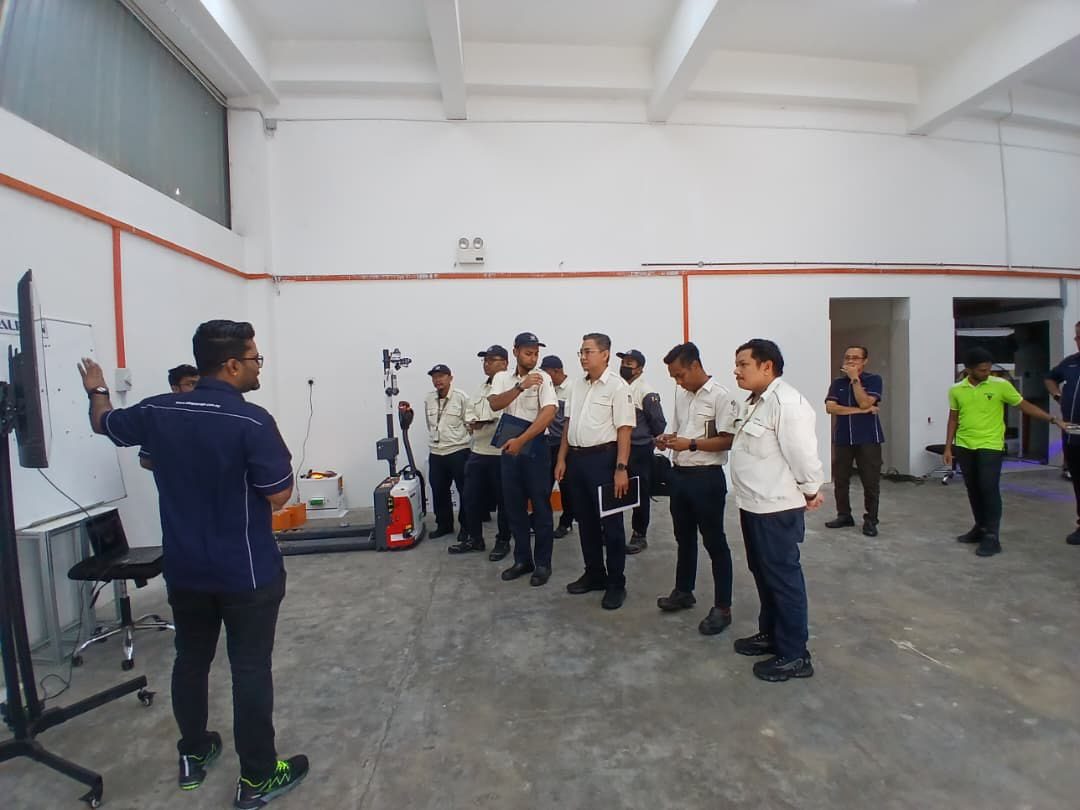
The robots are only half the project. The other half is a team that can run them. That is exactly the gap our AMR training program is built to close. Over three practical days, participants learn the hardware, the Robot Control System for mapping and navigation, and the Robot Dispatch System for managing a fleet, then finish by mapping a real area and building a working task chain themselves.
What your team needs to be able to do
Before you commit to any warehouse robot, ask whether your people will be able to do the following without calling the vendor every time.
- Map a new area or update an existing map when the layout changes.
- Draw routes, drop waypoints and build task chains that move product from point to point.
- Set up charging zones and traffic rules so a fleet keeps moving smoothly.
- Read the logs and do basic troubleshooting when a robot behaves oddly.
- Carry out routine maintenance to keep the fleet reliable.
If the honest answer is "not yet", that is not a reason to avoid robots. It is a reason to train the team alongside the rollout, so the technology delivers from day one instead of sitting half-used.
Preparing the floor, whichever you choose
Both AGVs and AMRs like a clean, flat floor. Big cracks, steep ramps and loose debris confuse the drive and the sensors, so sorting the worst spots first is time well spent. Very shiny floors and large glass walls can occasionally play tricks on laser sensors, so it helps to know where the tricky areas are before you map. Decide early where robots and forklifts share space and where they should not, and put charging near the work rather than in a far corner. And check your wifi coverage across the whole floor, because weak signal in one aisle usually shows up as a robot that stalls in the same place every time.
None of this is complicated, but skipping it is the most common reason a rollout feels rocky. Get the floor right and the robots mostly take care of themselves.
The role of PLC and system integration
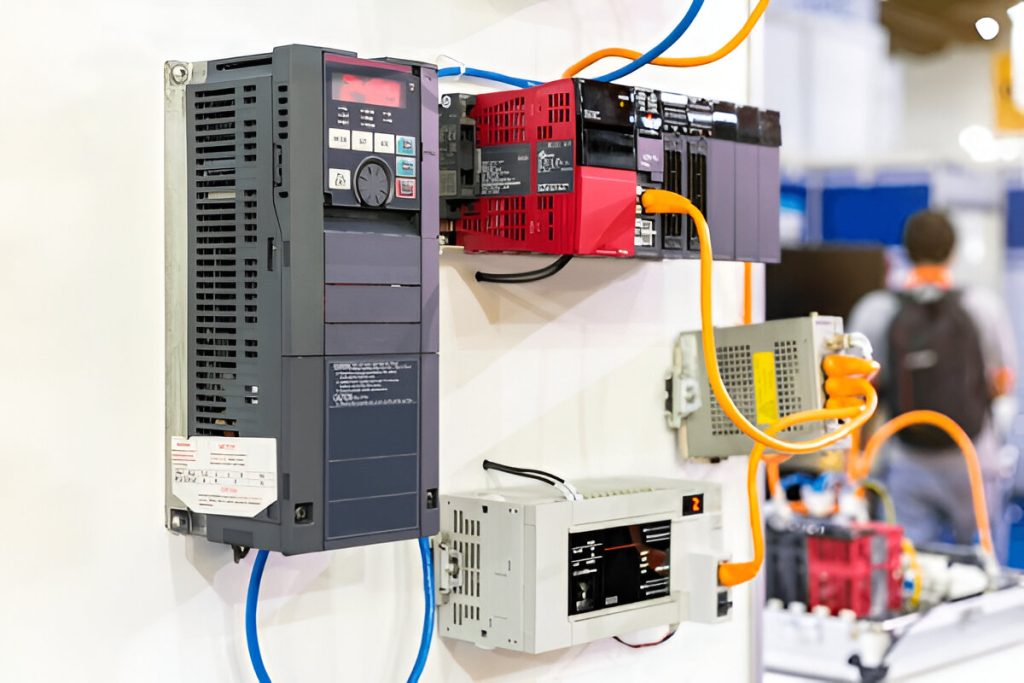
Warehouse robots rarely work in isolation. They interact with conveyors, lifts, doors and stations that are controlled by PLCs. A robot that can carry a tote to a station is useful. A robot that can signal a PLC to open a door, trigger a lift, and hand off to a conveyor is part of a genuinely automated flow. That handshake between robots and control systems is where the biggest gains hide, and it is a skill in its own right.
This is why we also run PLC and AMR integration training, where teams learn both sides and then wire them together in a single project. For a warehouse serious about automation, that integration capability turns a set of individual robots into a system that runs the floor.
Funding the training through HRD Corp
One reason Malaysian employers hesitate on training is cost, and it is often an unnecessary worry. If your company pays the HRD Corp levy, our robotics and automation courses are claimable under the SBL-Khas scheme, because we are a registered training provider, serial number 202501044803. You apply for the grant before the course, we provide the quotation and course outline you need, and for most clients the reimbursement covers the full fee. In practice that means you can bring your team up to speed on AMRs with little or no out-of-pocket cost, which changes the maths on the whole project.
A simple decision framework
If you take one thing away, let it be this short checklist. Ask yourself four questions. Does my flow change often, or is it fixed? Do I share a lot of space with people and forklifts? Am I likely to grow from one robot to several? And do I want to avoid modifying my floor? If most of your answers point toward change, sharing, growth and no floor works, an AMR is very likely the better fit. If you have one fixed loop, plenty of clear space and a tight first budget, an AGV can still do the job.
Then, whichever you choose, plan the people side at the same time as the hardware. The warehouses that get real value from automation are not the ones that buy the fanciest robot. They are the ones whose teams can map, route, dispatch and troubleshoot without waiting on anyone.
Where to start
Start by being clear about your flow and your floor, then talk to someone who can look at both the technology and the team. Tell us what your warehouse handles and where you want to get to, and we will help you think through whether an AGV or an AMR fits, and what your people need to learn to run it well. We keep training groups small and hands-on, because mapping a real robot only makes sense when you have done it yourself.
The move to warehouse robots is one of the biggest operational decisions a Malaysian company will make this decade. Get the choice right, prepare the floor, and train the team, and the robots become one of the most reliable workers you have. Contact us for a training quote or a conversation about getting your team ready, HRD Corp claimable where eligible.
Counting the real return, not just the price
Warehouse robots are usually justified on labour, but the honest return is broader than that. Yes, an AMR can take over repetitive transport that currently ties up staff walking totes across a floor all day. But the bigger wins often show up in places managers do not budget for. Fewer picking errors because product arrives at a station instead of a person hunting for it. Fewer safety incidents because heavy loads move on a machine rather than a trolley pushed by a tired worker at the end of a shift. Steadier throughput because a robot does not slow down at 4pm the way people do.
There is also the recruitment angle. Warehouse labour in the Klang Valley is getting harder and more expensive to hire and keep. A team that runs robots is doing more skilled, more interesting work, which is easier to recruit for and hold onto than pure manual handling. When you add these together, the payback period on a well-run AMR project is often shorter than the raw labour saving alone suggests.
A realistic rollout timeline
Companies often imagine robots arriving and transforming the floor overnight. The reality is calmer and more staged, and that is a good thing. A sensible AMR rollout starts with one clear flow, maps the area, and proves the concept with a single robot doing a real job. Once that works and the team is comfortable, you add robots and routes, then layer in the integration with conveyors, doors and stations. Each step builds confidence and skill.
The pace of that rollout is set almost entirely by how ready the team is. A trained team moves through each stage quickly because they can map, route and troubleshoot themselves. An untrained team stalls at every step waiting on the vendor. This is the single strongest argument for training the people in parallel with buying the hardware, rather than after.
Frequently asked questions
Is an AMR always better than an AGV? No. For one fixed, high-volume loop with a tight budget, an AGV can still be the smart choice. The AMR earns its premium when your operation changes, shares space with people, or plans to scale.
Do AMRs work safely around people? Yes, that is a core part of their design. They detect people and obstacles and slow or reroute. Your team still needs to understand the safety features and set up traffic sensibly, which is part of proper training.
How much floor work do we need? For AMRs, usually very little beyond a clean, flat, reasonably lit floor and solid wifi. No tracks or wires. That is one of their advantages over AGVs.
Can our existing maintenance team learn to run them? Almost always, yes. A practical three-day course covers mapping, dispatch and basic troubleshooting, and teams keep improving once they are using the system daily. You do not need robotics specialists to start.
Can the training be HRD Corp claimable? For eligible employers, yes. We are a registered provider and prepare the paperwork so most of the cost is covered by your levy.
The bottom line
The AGV versus AMR question is really a question about how much your warehouse changes. If your flow is fixed and simple, an AGV can serve you well. If your operation is dynamic, crowded and growing, which describes most Malaysian warehouses today, the flexibility of an AMR usually pays off. But whichever you choose, remember that the robot is only half the investment. The team that maps, routes, dispatches and maintains it is what turns an expensive machine into a dependable one. Buy the right robot, prepare the floor, and train the people, and you will get the automated warehouse you are actually paying for.
A note for Subang Jaya and Selangor operations
For warehouses and plants across Subang Jaya, Shah Alam, Klang and the wider Selangor industrial belt, there is a practical advantage to training locally. Your team can learn on real AMR hardware, then apply it in a facility a short drive away, with a trainer who understands the local industry and can visit if needed. Being based in Subang Jaya means we can talk through your specific layout, sit down with your engineers, and shape the training around the machines and flows you actually run rather than a generic example. If you are weighing an AGV or an AMR for a Selangor site, that local, hands-on support shortens the distance between deciding to automate and actually seeing it work on your floor.
Ready to train your team?
Our training programmes are HRD Corp claimable for eligible employers. Get a proposal in one working day.
Request a Quote