One robot is easy. A fleet that coordinates itself is where the value is. What RCS and RDS actually do, and what your team needs to run a fleet well.
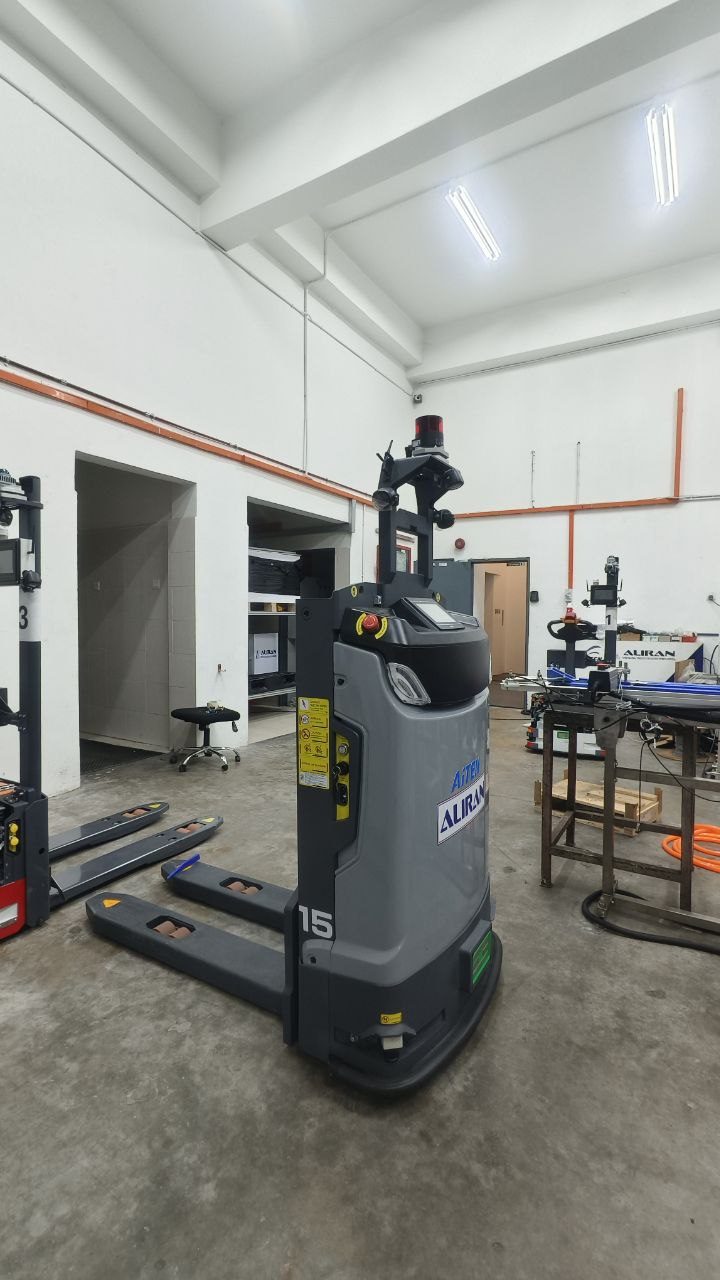
One autonomous mobile robot is a novelty. A fleet of them, moving product around a busy floor without colliding, queuing sensibly at stations, and charging themselves when they run low, is an operation. The jump from one robot to a coordinated fleet is where AMRs actually transform a warehouse or plant, and it rests on two pieces of software that every AMR team needs to understand: the Robot Control System and the Robot Dispatch System. This article explains what RCS and RDS do, how they work together, and why understanding them is the difference between owning robots and running a fleet.
The two brains behind an AMR operation
It is easy to think of an AMR as a single smart machine, but a real deployment has two layers of intelligence. The first is about the individual robot knowing where it is and how to move. The second is about the whole fleet working together to get jobs done. RCS handles the first. RDS handles the second. Get both right and a group of robots behaves like a well-run team. Get either wrong and you have expensive machines bumping into each other and sitting idle.
RCS: the Robot Control System
The Robot Control System is where the individual robot's intelligence lives. It is the software that lets a robot understand its environment and move through it. The most important thing RCS does is mapping. Using a process called SLAM, which stands for Simultaneous Localisation and Mapping, the robot builds a map of your facility from its sensors and then works out where it is on that map in real time.
Once the map exists, RCS is where you define how the robot navigates it. You draw the routes the robot can take. You drop waypoints, the specific points a robot travels to. You build task chains, sequences of moves and actions that make up a job. This is the layer that turns a robot from a machine that can move into a machine that knows where to go and what to do when it gets there.
RCS teaches one robot where it is and how to move. RDS teaches a fleet how to work together. You need both.
What you actually do in RCS
For a team learning to run AMRs, RCS is where a lot of the hands-on skill lives. The practical tasks include mapping a real area cleanly, so the robot has an accurate picture of the space. Drawing sensible routes that avoid problem spots and keep traffic flowing. Placing waypoints where the robot needs to stop, load, unload or wait. And building task chains that string these together into a complete job, like collecting a tote from one station and delivering it to another.
This is not abstract. A person who can map an area and build a working route is genuinely useful the moment they walk back onto the floor. It is also a skill you only really acquire by doing it. Reading about SLAM teaches you the theory. Mapping a real space with a real robot teaches you how to get a clean, reliable map that the robot can actually navigate.
RDS: the Robot Dispatch System
The Robot Dispatch System is the fleet layer. When you have more than one robot, something has to decide which robot does which job, keep them from colliding, manage their charging, and control traffic through shared spaces. That is RDS. It is the difference between a group of individual robots and a coordinated fleet.
Think about what happens without it. Two robots head for the same narrow aisle from opposite ends. Both stop, unsure. A third runs low on battery but has no system telling it when to go and charge. Jobs pile up with no logic assigning them. RDS solves all of this. It assigns tasks intelligently, routes robots so they share space smoothly, manages charging so the fleet stays available, and applies traffic rules so busy areas do not gridlock.
What you actually do in RDS
Running a fleet through RDS involves setting up the framework the robots operate within. You configure the warehouse or plant areas, including where robots store, where they charge, and where traffic is controlled. You import the maps and the robots so the dispatch system knows the space and the fleet. And you set the rules that keep everything moving, so a busy corridor does not become a traffic jam and a low-battery robot goes to charge before it strands itself.
Warehouse supervisors often tell us this is the part they use the most, because it is where the day-to-day flow of the operation is actually managed. A team that understands RDS can tune the fleet as needs change, add robots without chaos, and keep throughput high even when the floor is busy.
How RCS and RDS work together
The two systems are layers of the same operation. RCS gives each robot the ability to know where it is and move safely and accurately. RDS takes that fleet of capable robots and orchestrates them toward getting work done efficiently as a group. You map and define routes in RCS, then import those maps and robots into RDS, where you manage the fleet across the whole facility.
Understanding both is essential because problems can live in either layer. A robot navigating badly is usually an RCS or mapping issue. A fleet that flows poorly, with jams or idle robots, is usually an RDS configuration issue. A team that understands the split can diagnose which layer a problem sits in and fix it, rather than guessing.
Why fleet skills matter more as you scale
With a single robot, you can get away with a shallow understanding. The robot does its one job and there is no fleet to coordinate. The moment you add a second and third robot, the fleet layer becomes critical. Traffic, charging, task assignment and shared spaces all start to matter, and a team that only understands the single-robot layer will struggle.
This is exactly why serious AMR deployments need people who understand both RCS and RDS. As the fleet grows, the value of that fleet-management skill grows with it. A warehouse planning to scale from one robot to ten is really planning to depend heavily on RDS, and the team needs to be ready for that before the robots arrive, not after.
Learning RCS and RDS the right way
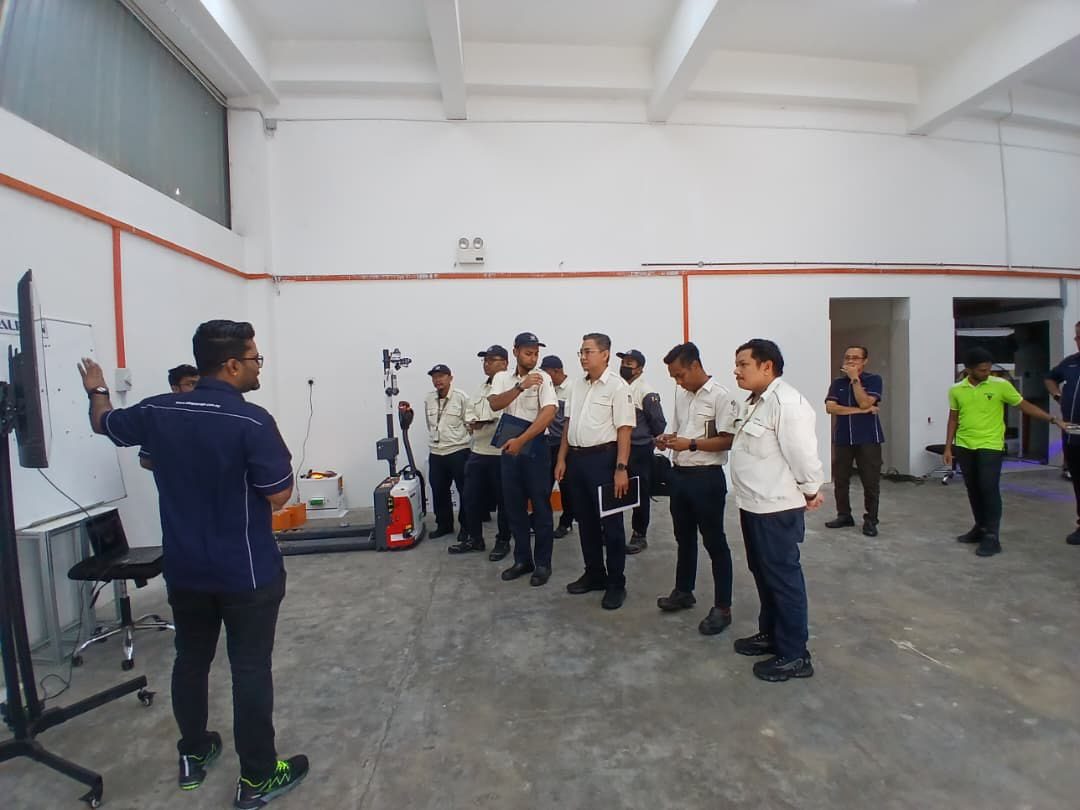
This is the heart of our AMR training program. The three-day course is built around exactly these two systems. It starts with the robot and the fundamentals, moves into RCS for mapping and navigation, then into RDS for dispatch, charging and traffic, and finishes with a practical day where participants map a real area, draw routes, build task chains, and import maps and robots into the dispatch system themselves.
The reason we structure it this way is that RCS and RDS are skills you have to practise, not just hear about. By the end, a participant has actually mapped a space, built a working task chain, and set up a fleet configuration. That is the difference between someone who has heard of SLAM and someone who can walk onto your floor and get a fleet running.
Common fleet-management mistakes
- Poor initial mapping, so robots navigate unreliably and blame falls on the wrong thing.
- Charging zones placed far from the work, so robots waste time travelling to charge.
- No traffic rules in shared corridors, so busy areas gridlock at peak times.
- Adding robots without revisiting the dispatch configuration, so the fleet does not actually scale.
- Nobody in-house who understands RDS, so every fleet change means a vendor call.
All of these come back to understanding the two layers. A team that knows RCS keeps the individual robots navigating cleanly. A team that knows RDS keeps the fleet flowing. Together, they keep the whole operation productive.
Maintenance and troubleshooting
Fleet management is not only about setup. It is about keeping the fleet running day after day. That means basic troubleshooting when a robot behaves oddly, reading the logs to find the cause, and routine maintenance to keep the robots reliable. A robot that stalls in the same place every afternoon usually has a specific, findable cause, whether it is a mapping issue, a wifi dead spot or a traffic rule that needs adjusting. A trained team diagnoses and fixes this. An untrained team just lives with it or calls the vendor. Our AMR course includes this troubleshooting and maintenance thinking, because a fleet that nobody can maintain slowly grinds to a halt.
Frequently asked questions
Do we need to understand RDS if we only have one robot? Less so at first, but if you plan to scale, learning it early means you are ready when the second and third robots arrive. Fleet problems appear the moment you have more than one robot.
Is mapping hard to learn? The concept is straightforward, but getting a clean, reliable map takes practice on real hardware. That hands-on practice is exactly what the training provides.
Can our warehouse team learn this, or do we need specialists? Your team can learn it. A practical three-day course brings warehouse and maintenance staff to a genuinely capable level with both RCS and RDS. You do not need to hire robotics specialists to start.
What causes a robot to stall in the same spot repeatedly? Usually a mapping issue, a wifi dead spot, or a traffic rule that needs adjusting. A trained team can read the logs and pinpoint which one it is.
Is the training HRD Corp claimable? For eligible employers, yes. We are a registered provider and prepare the paperwork so most of the cost is covered by your levy.
A note for Selangor and Klang Valley operations
For warehouses and plants across Subang Jaya, Shah Alam, Klang and the wider Selangor area running or planning AMR fleets, learning RCS and RDS locally means your team practises on real robots and applies it at a nearby site. Being based in Subang Jaya, we can talk through your specific floor, your traffic patterns and your charging layout, and shape the fleet training around the operation you actually run. That local, hands-on support is what turns a fleet from a plan on paper into robots moving reliably on your floor.
The bottom line
The value of AMRs is unlocked at the fleet level, and the fleet level runs on two systems: RCS for the individual robot's mapping and navigation, and RDS for coordinating the whole fleet's tasks, traffic and charging. A team that understands both can map cleanly, route sensibly, dispatch efficiently and troubleshoot confidently, which is what keeps a fleet productive as it grows. That understanding is exactly what our AMR training is built to deliver, hands-on, on real hardware, with a practical project at the end. Own RCS and RDS, and you own your fleet rather than depending on the vendor for every change. Contact us for an AMR training quote, HRD Corp claimable where eligible.
Batteries and charging: the strategy that keeps a fleet alive
One of the least glamorous parts of fleet management is also one of the most important: charging. A robot that runs out of charge in the middle of a shift is not just idle, it can block an aisle and disrupt the whole fleet. Good charging strategy is built into RDS, and a trained team knows how to set it up so it never becomes a problem.
The core idea is opportunity charging. Rather than running a robot flat and then taking it out of service for a long charge, modern fleets top up during natural gaps in the work, returning robots to charging stations when they dip below a threshold and there is no urgent task. This keeps the whole fleet available for far more of the shift. Placing charging stations near the work rather than in a far corner matters too, because a robot travelling a long way to charge is wasted movement. A team that understands these choices keeps availability high without anyone thinking about batteries during the day.
The network layer nobody budgets for
An AMR fleet talks to its dispatch system over wifi, constantly. That makes your wireless network a critical part of the operation, not an afterthought. Weak coverage in one aisle shows up as robots that stall or hesitate in the same place every time, and the cause is often mistaken for a robot fault when it is really a network dead spot. A team that understands this checks signal strength across the whole floor as part of commissioning, and knows to look at the network when a robot behaves oddly in a specific location. This is one of those practical lessons that separates a team who has been properly trained from one learning the hard way on a live floor.
Measuring whether your fleet is actually performing
Once a fleet is running, the question becomes whether it is running well. The systems produce information that tells you: how many tasks each robot completed, how much time was spent moving versus waiting, how often robots queued, and how available the fleet was across the shift. A team that can read these numbers can tune the operation, adjusting routes, traffic rules and charging to squeeze more out of the same robots. Without that understanding, a fleet drifts along at whatever performance it happens to deliver, and nobody knows whether it could do better. Fleet management is not a set-and-forget task. It is an ongoing process of watching, understanding and improving, which is why the people running it need real skill rather than a one-time setup by the vendor.
A scenario: scaling from two robots to six
Picture a distribution centre in Shah Alam that starts with two AMRs on a simple delivery loop. Everything runs smoothly, and management decides to scale to six robots to cover more of the floor. Without fleet skills, this is where trouble starts: robots queue at pinch points, two head into the same aisle from opposite ends, and the whole fleet feels slower than the original two. With a team that understands RDS, scaling is smooth. They revisit the traffic rules for the busier floor, add charging capacity in sensible spots, tune the task assignment, and the six robots deliver far more than three times the two. The robots were identical in both cases. The difference was entirely in the team running them, which is the whole argument for training the people before you scale the fleet.
What good fleet management looks like day to day
Once a fleet is running well, the management layer fades into the background, which is exactly the point. Jobs come in, the dispatch system assigns them to the best-placed robot, robots route around each other and around people without drama, batteries top up during quiet moments, and the whole thing keeps flowing without anyone standing over it. Getting to that calm state is the work. It takes a team that understands how the fleet manager decides which robot takes which job, how traffic rules keep robots from deadlocking in a narrow aisle, and how to read the fleet's status when something does need attention. A team that understands these things spots a developing problem, a robot repeatedly waiting at one junction, a charging pattern that leaves the fleet short at peak, before it turns into a stoppage. That quiet, capable oversight is what separates a fleet that genuinely lifts productivity from one that becomes a daily source of frustration, and it is precisely the understanding our AMR training is built to give your people.
Ready to train your team?
Our training programmes are HRD Corp claimable for eligible employers. Get a proposal in one working day.
Request a Quote